


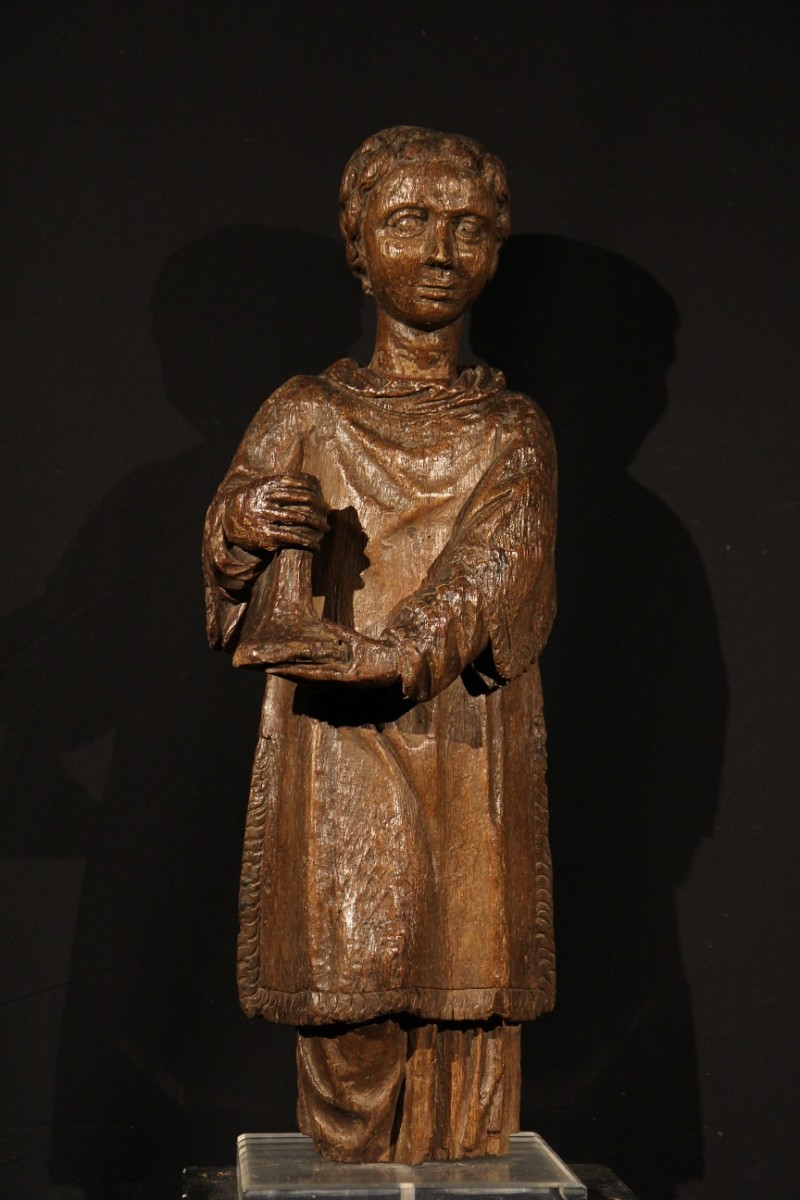
16th C Oak wood statue. Angel dressed as a deacon. Northern France.
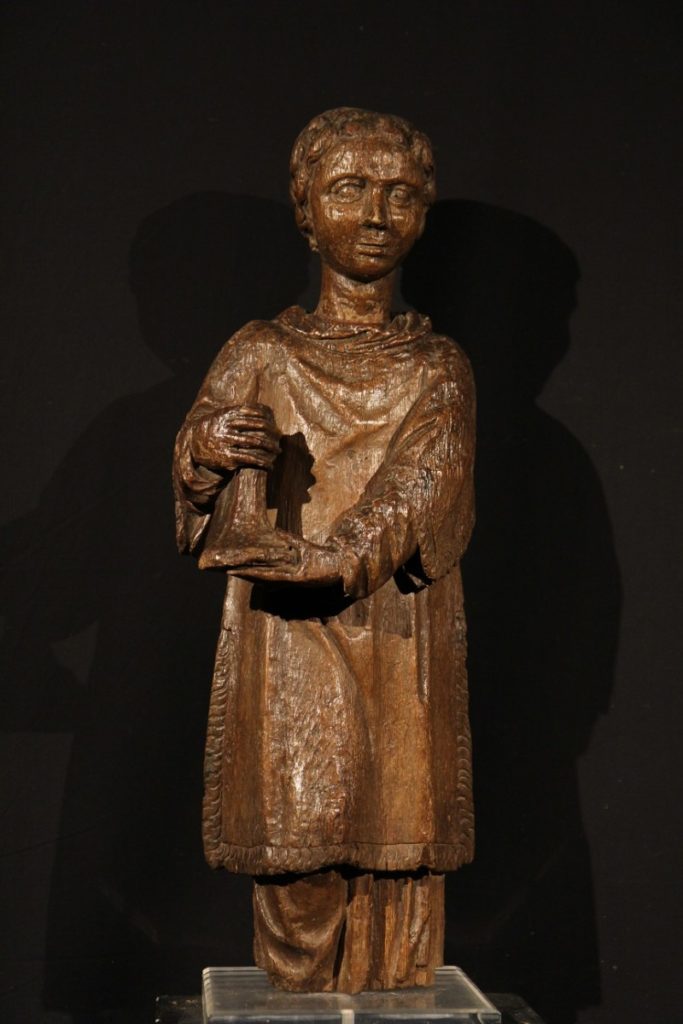
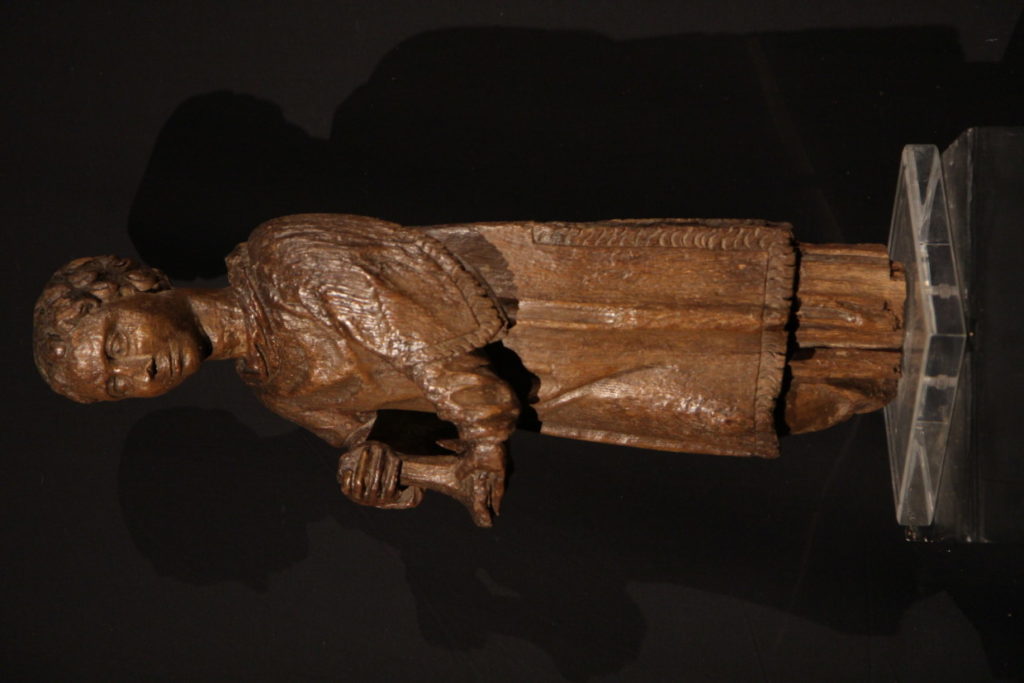
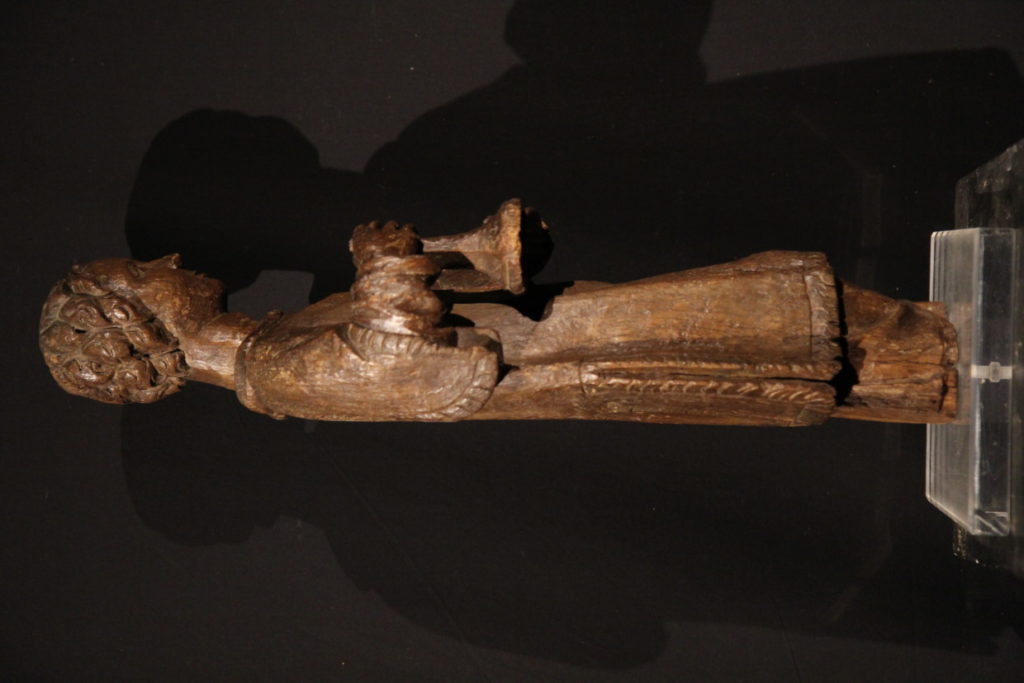
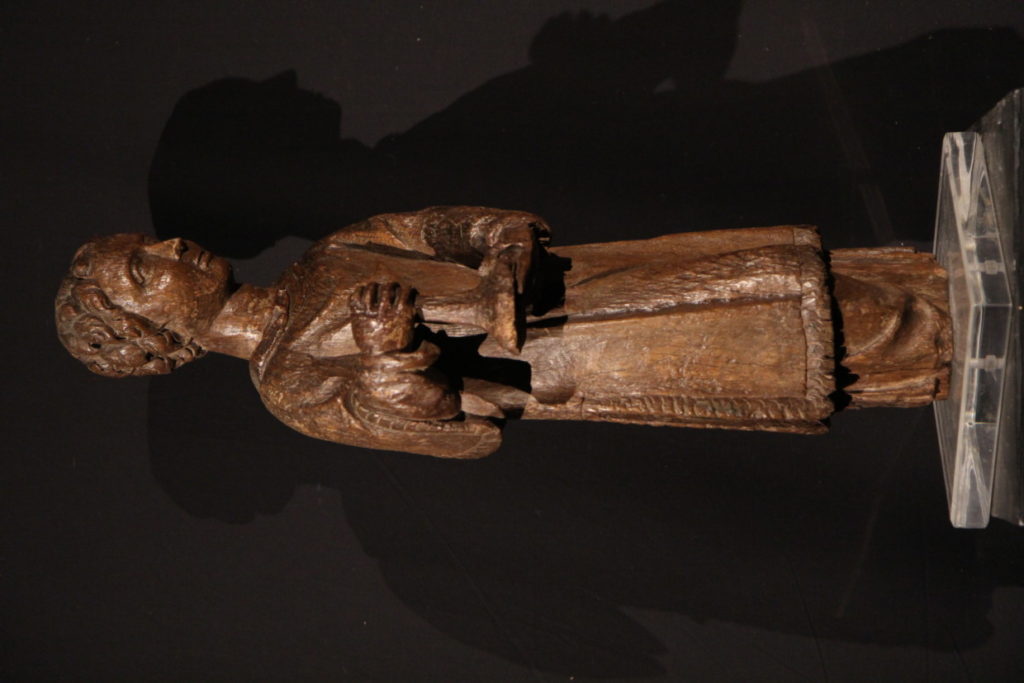
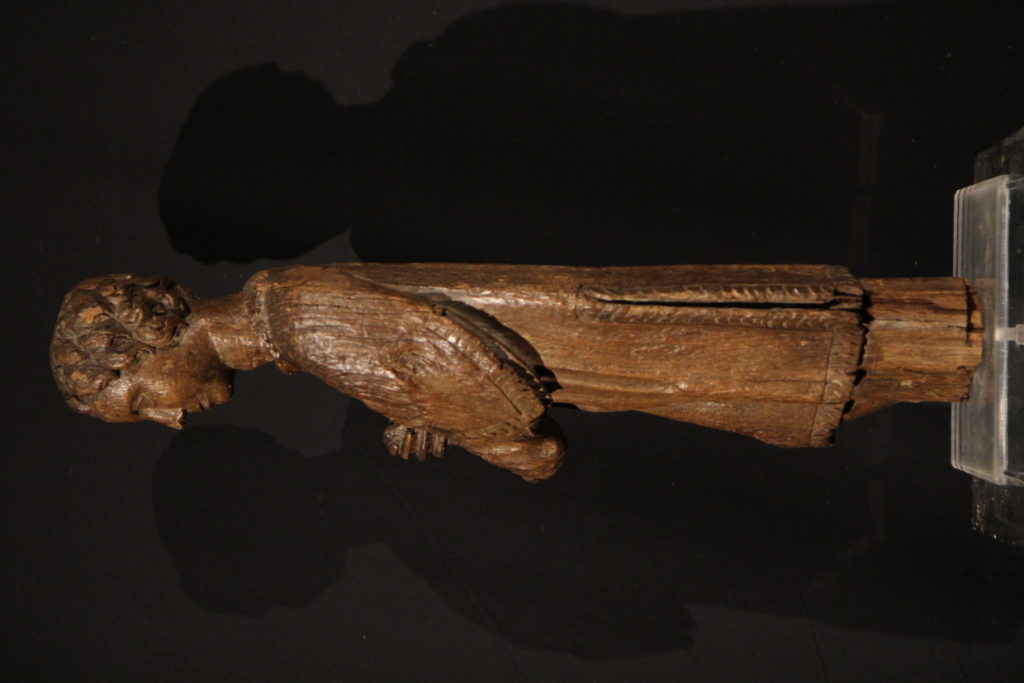
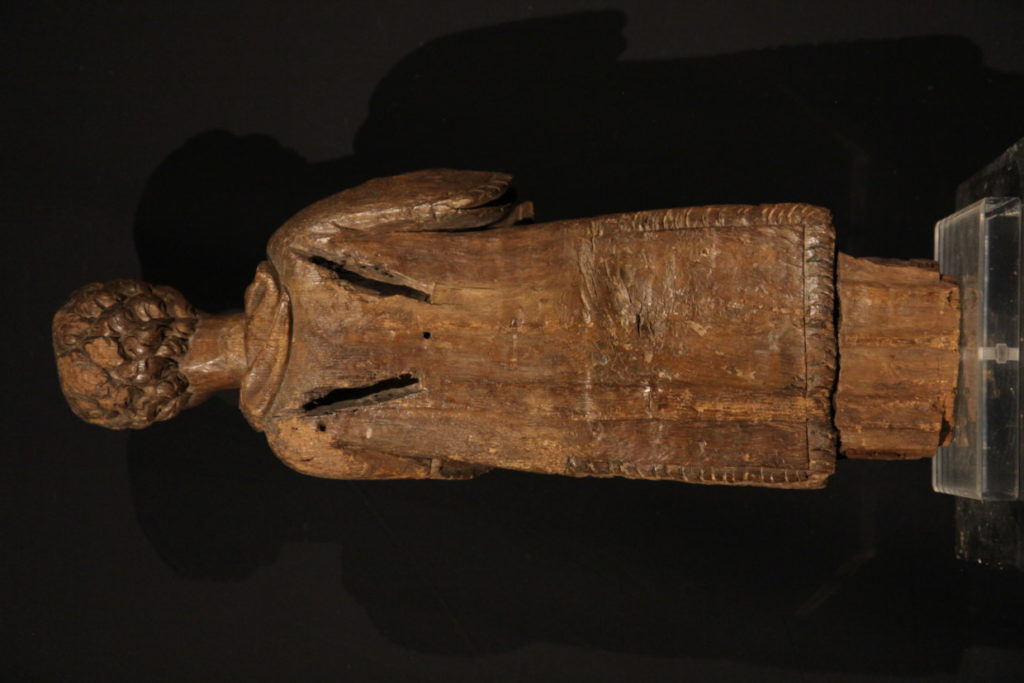
16th C Oak wood statue representing an angel dressed as a deacon. Northern France.
16th C Oak wood statue representing an angel dressed as a deacon. Wearing a surplice, he holds a ciborium in his hands.
Northern France.
Details
| Period | 16th C |
| Heigth | 23,62″ |
| Width | 7,87″ |
| Depth | 5,51″ |
| Price | 1 600 euros |
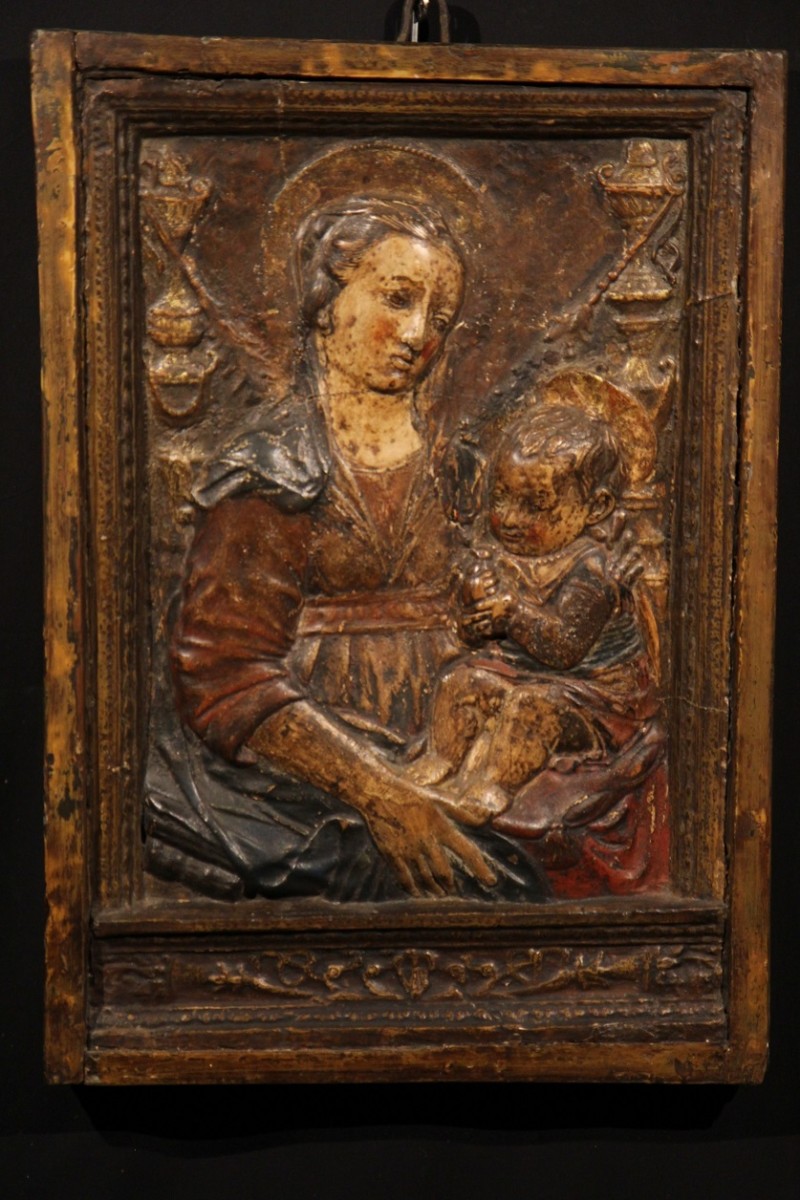
16th-c Florentine school. Virgin and Child. Bas-relief in polychrome cartapesta.
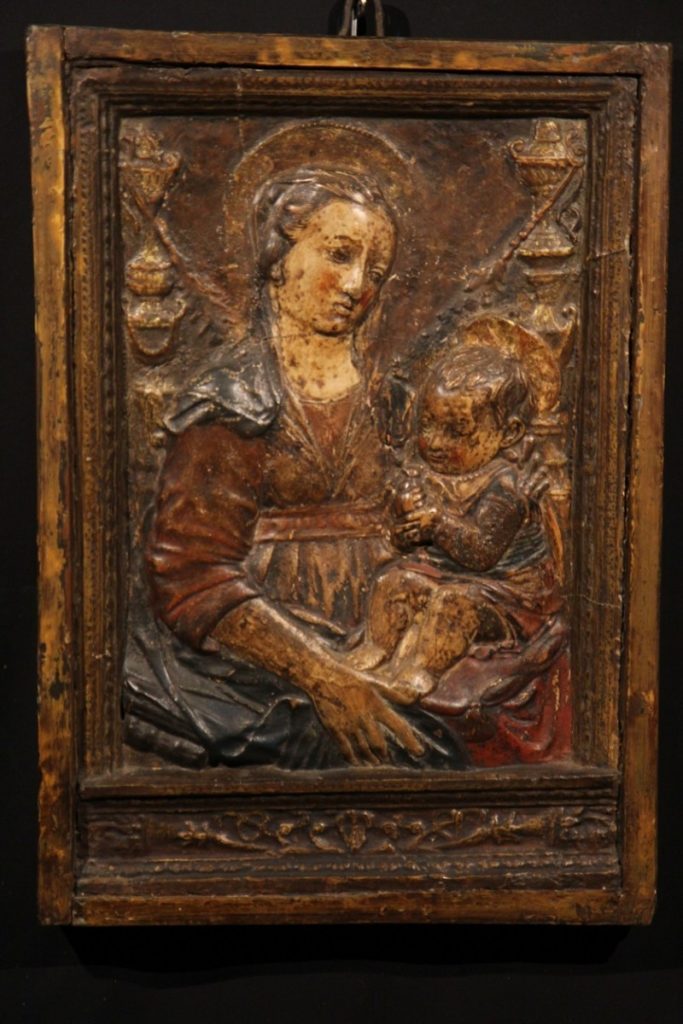
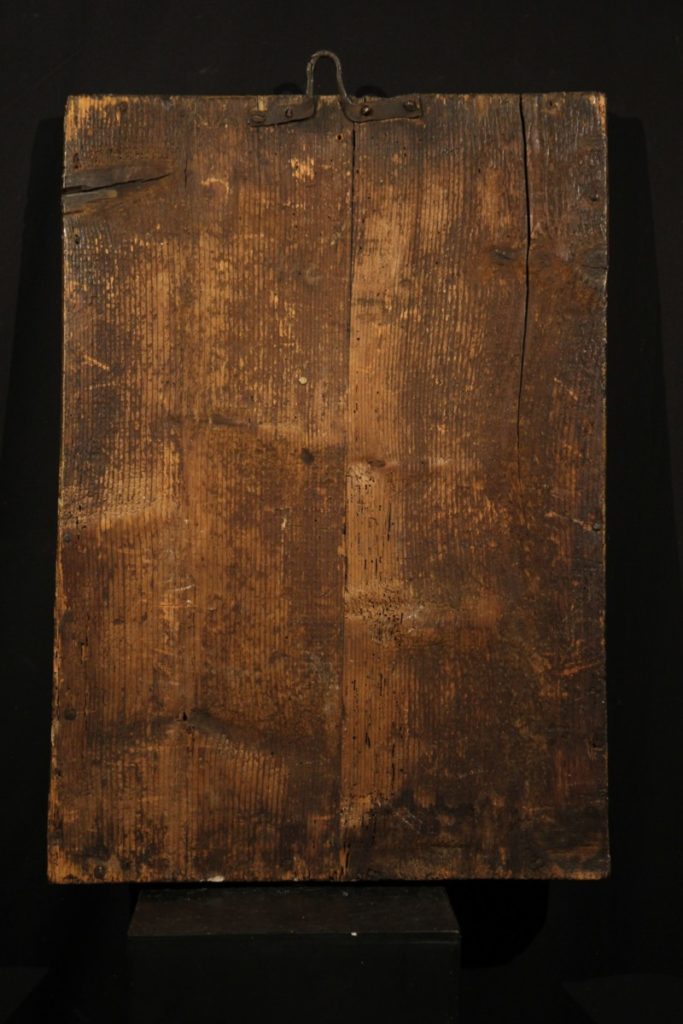
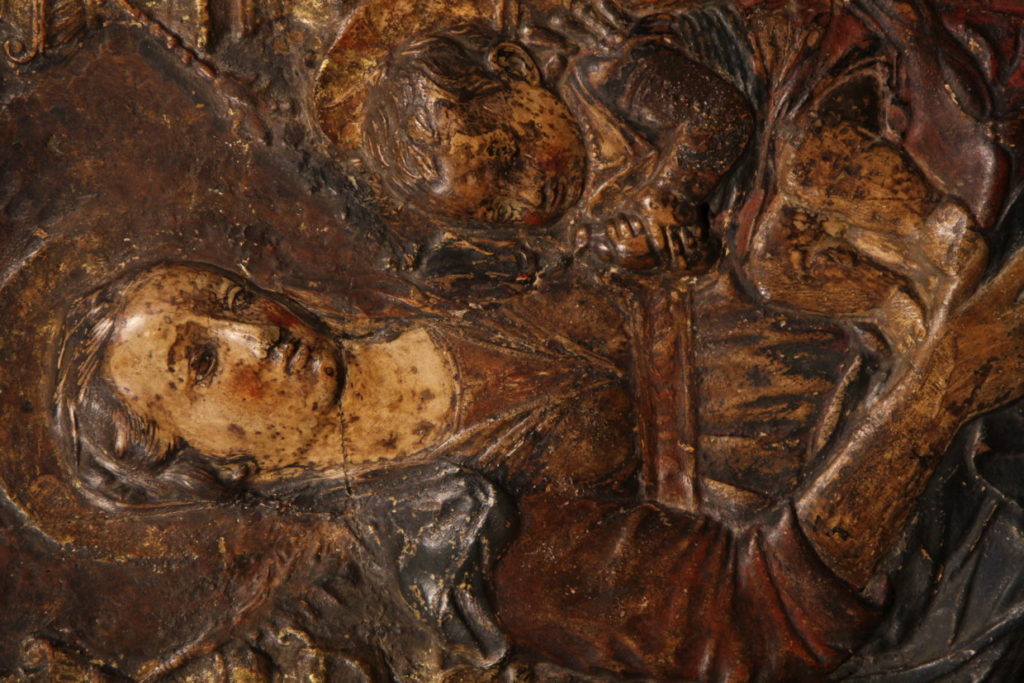
16th-century Florentine school. Virgin and Child between two candelabras. Bas-relief in polychrome cartapesta.
16th-century Florentine school. Follower of Antonio ROSSELINO (1409-1464). Virgin and Child between 2 candelabras in a wooden frame. Bas-relief in polychrome cartapesta representing the Virgin seated with her son on her knees. Several copies were made at the time. A fairly similar model is displayed at the Château de Chaalis annex of the Jacquemart-André Museum.
Details
| Period | 16th C |
| Heigth | 27, 95″ |
| Width | 19,685″ |
| Price | 6 500 euros |
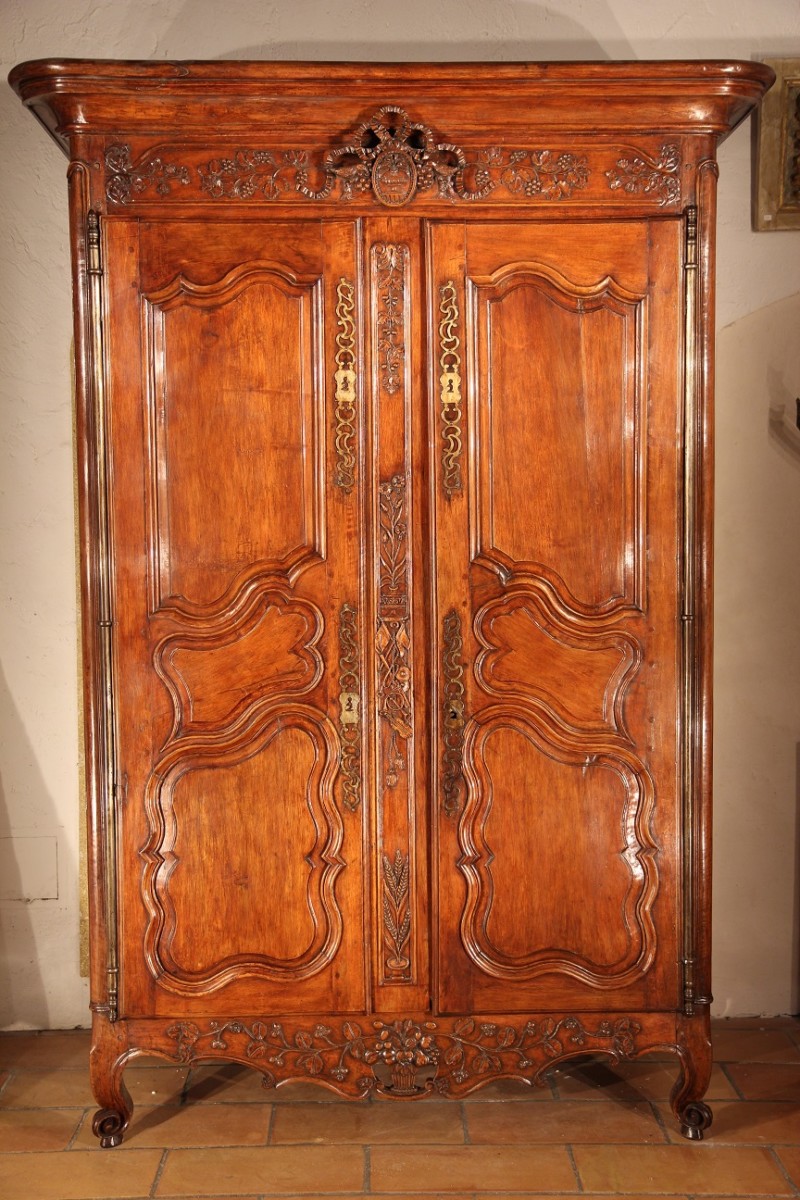
18th C Provençal wedding armoire (wardrobe). Walnut wood.
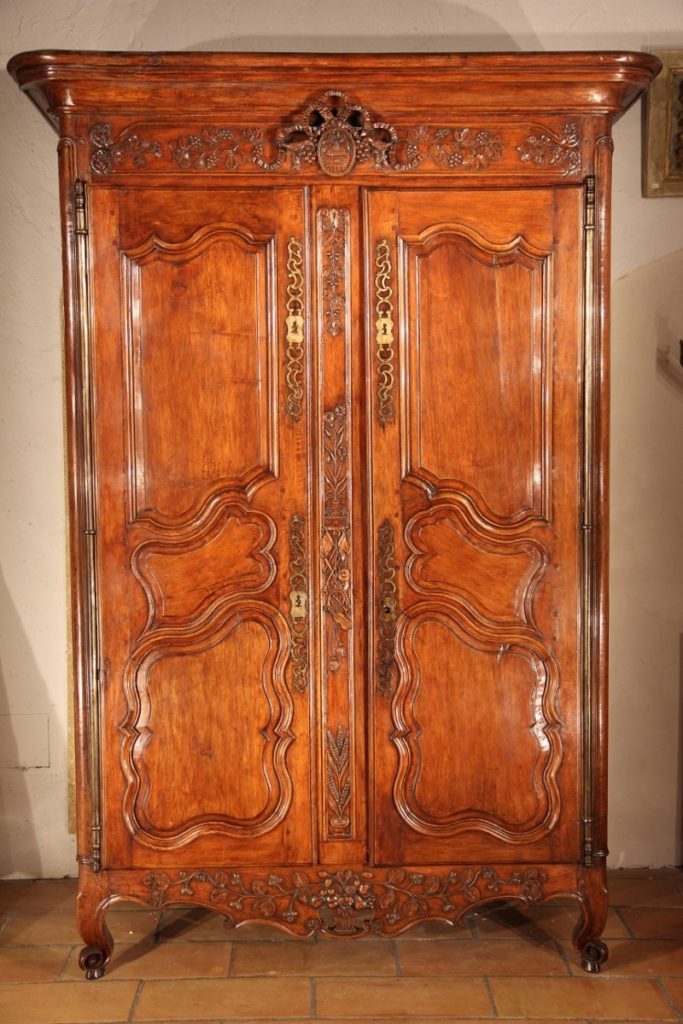
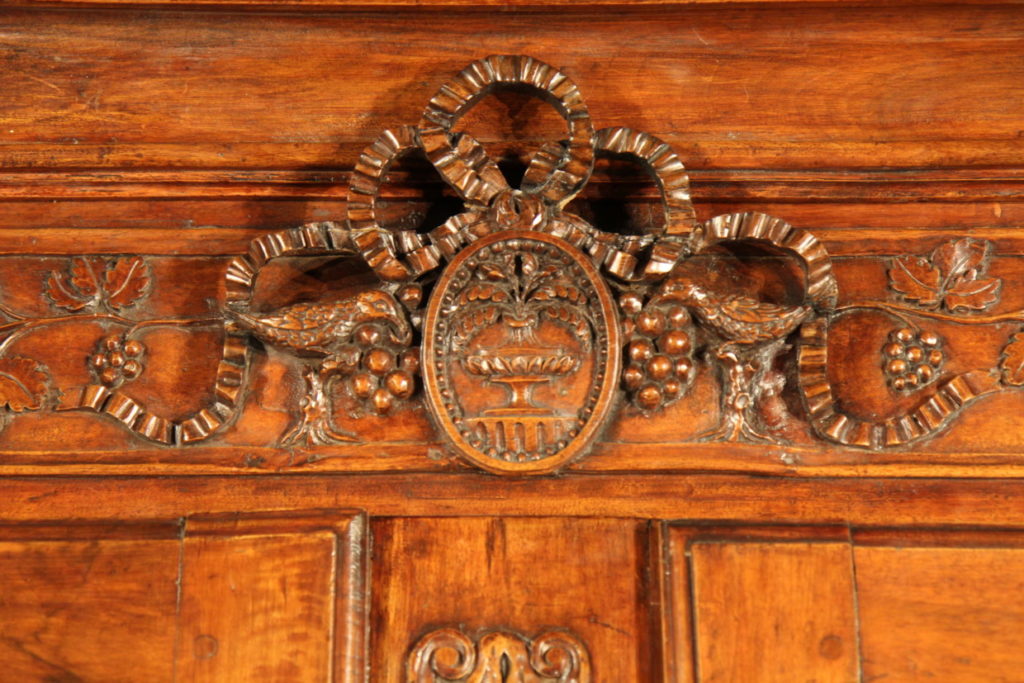
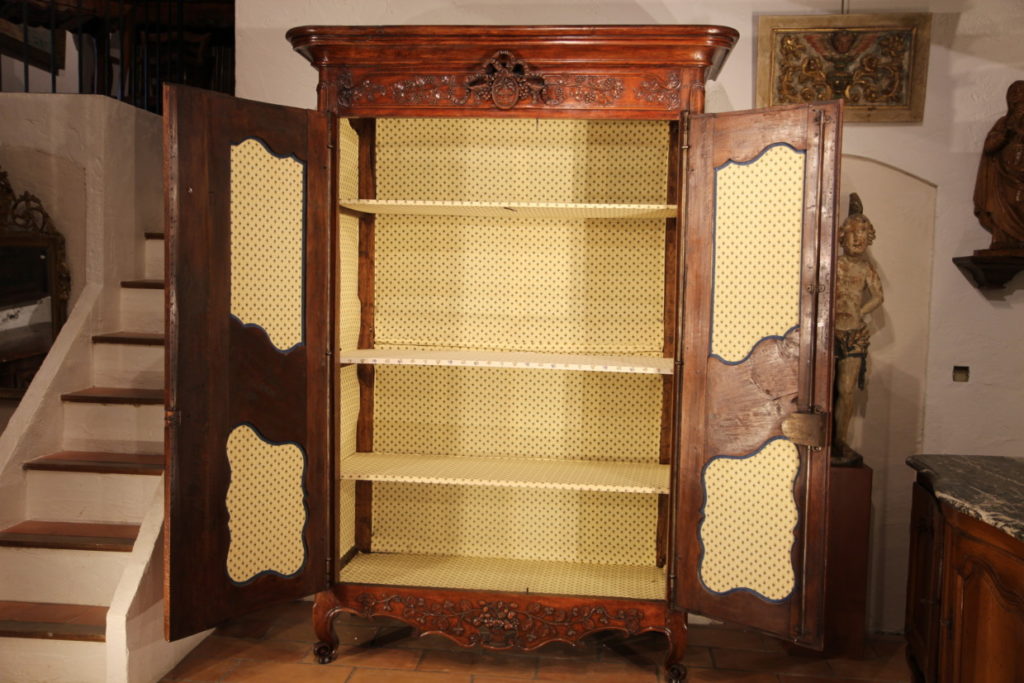
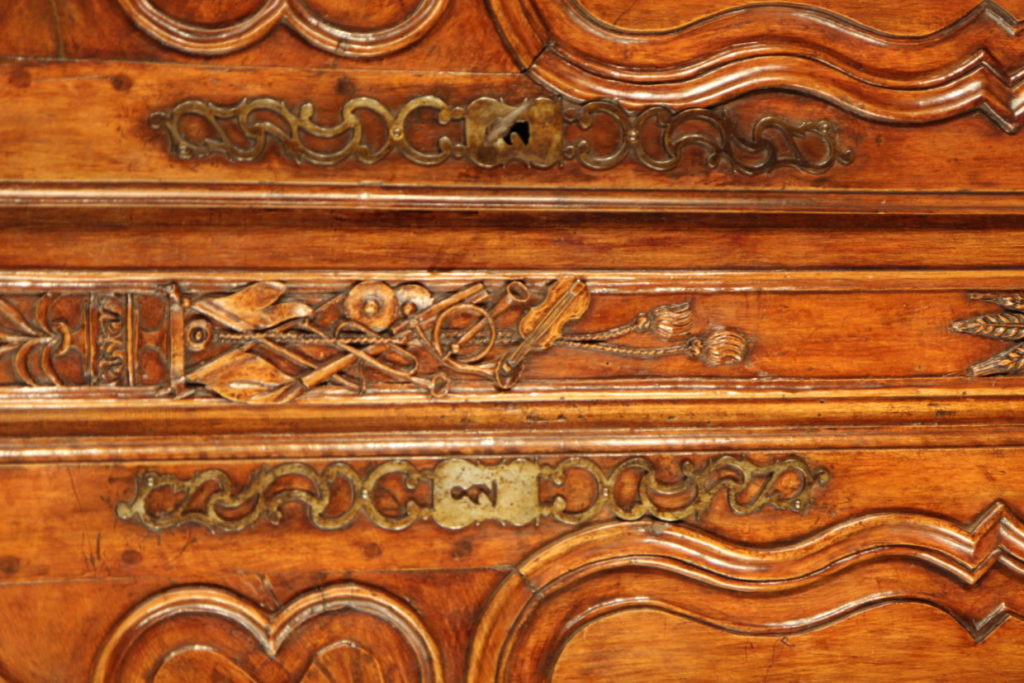
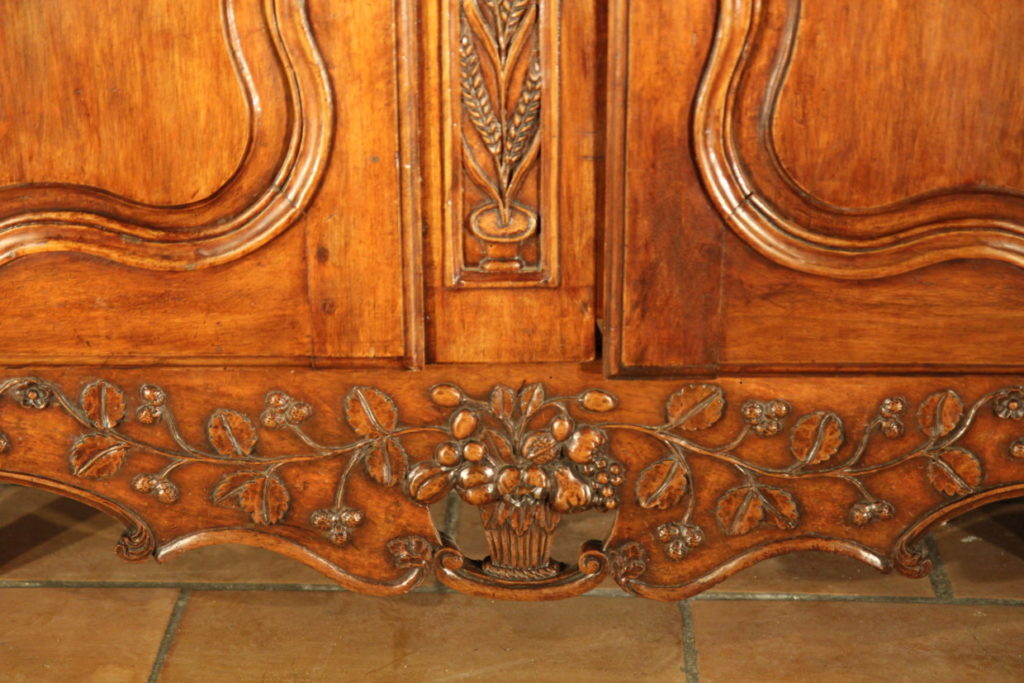
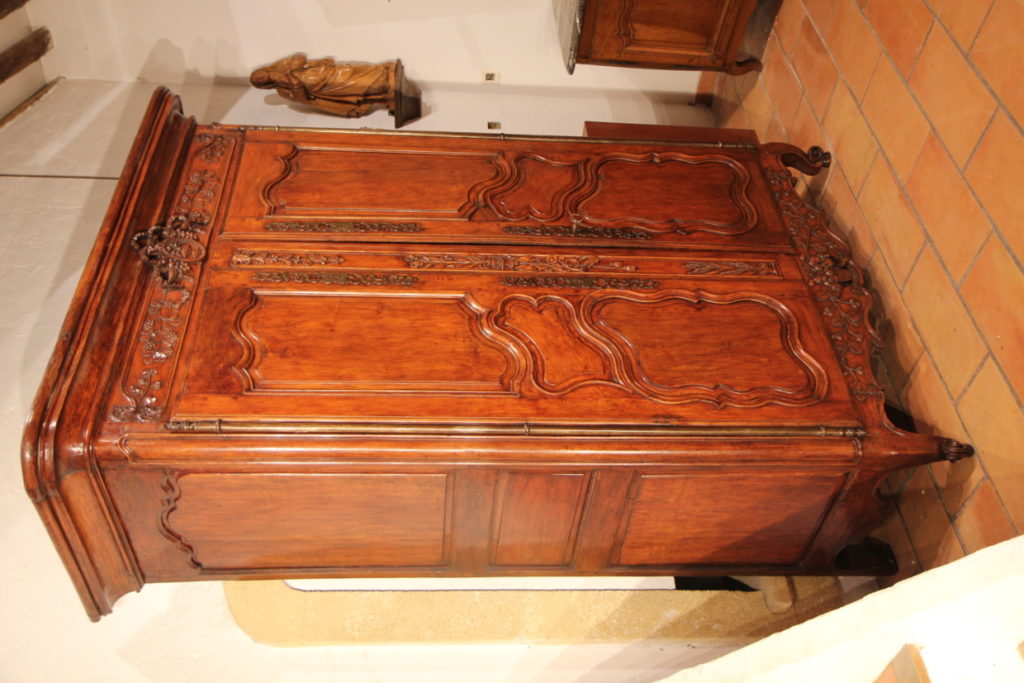
18th C Provençal wedding armoire (wardrobe). Walnut wood stained with alkanet.
18th C Provençal wedding armoire (wardrobe). According to tradition, the front is richly carved with vine branches, wedding ribbons, and a pair of doves on the pediment; musical instruments and ears of wheat on the piece between the doors; and finally, a basket of fruit and oak branches garnished with acorns on the low crossbar.
The ironwork is original. Walnut wood stained with alkanet.
Details
| Period | 18th C |
| Heigth | 88,58″ |
| Width | 52,76″ |
| Depth | 23,62″ |
| Cornice width | 61,42″ |
| Price | 5 300 euros |
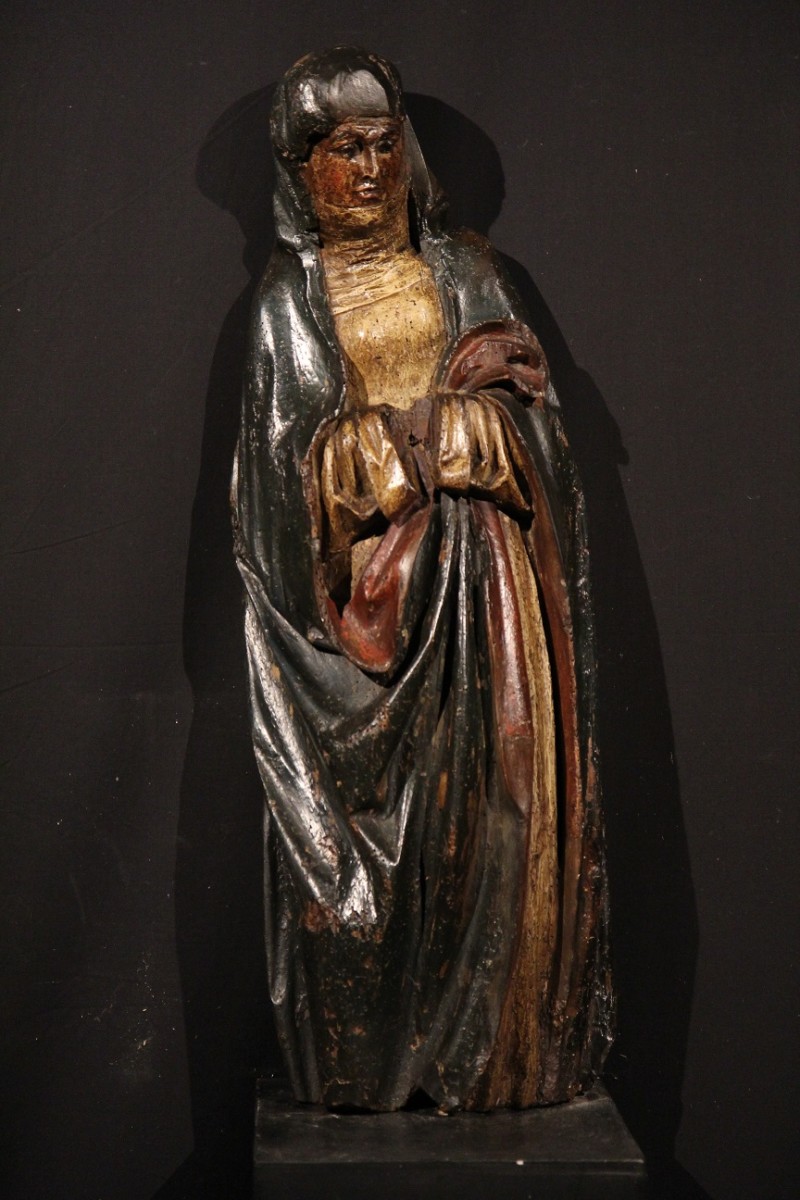
Virgin of Sorrows. Polychrome lime wood statue. Germany, 1st half of 15th c.
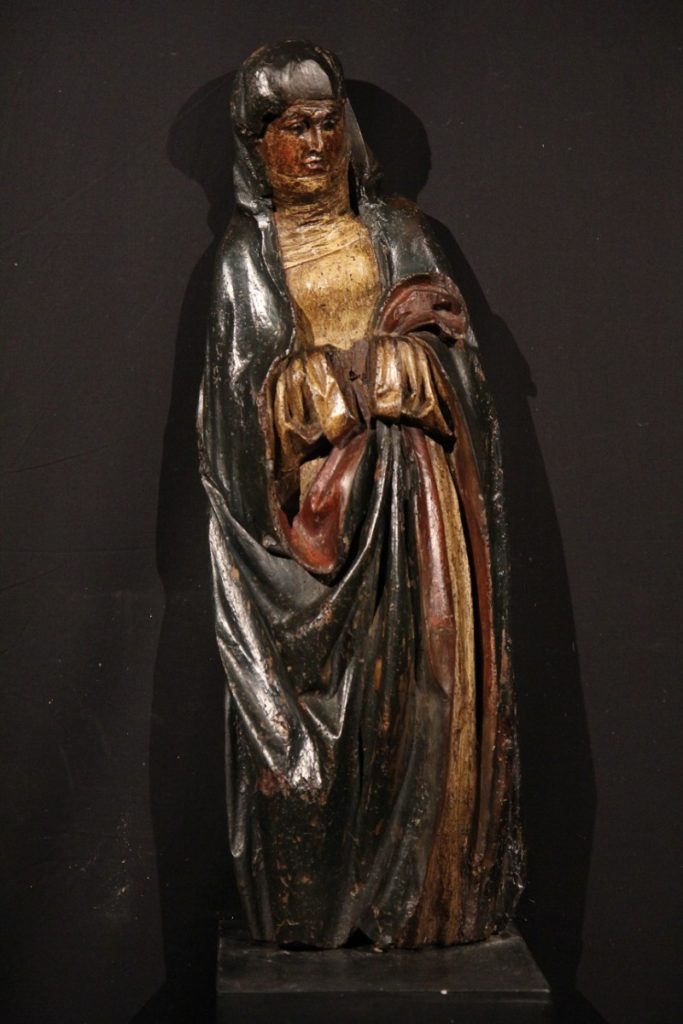
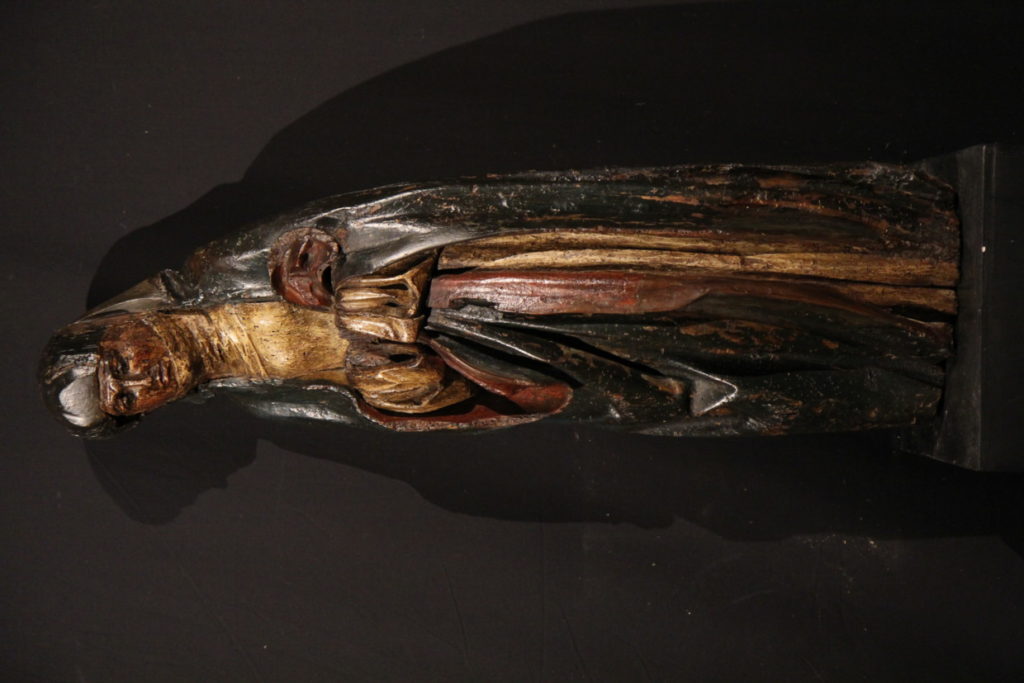
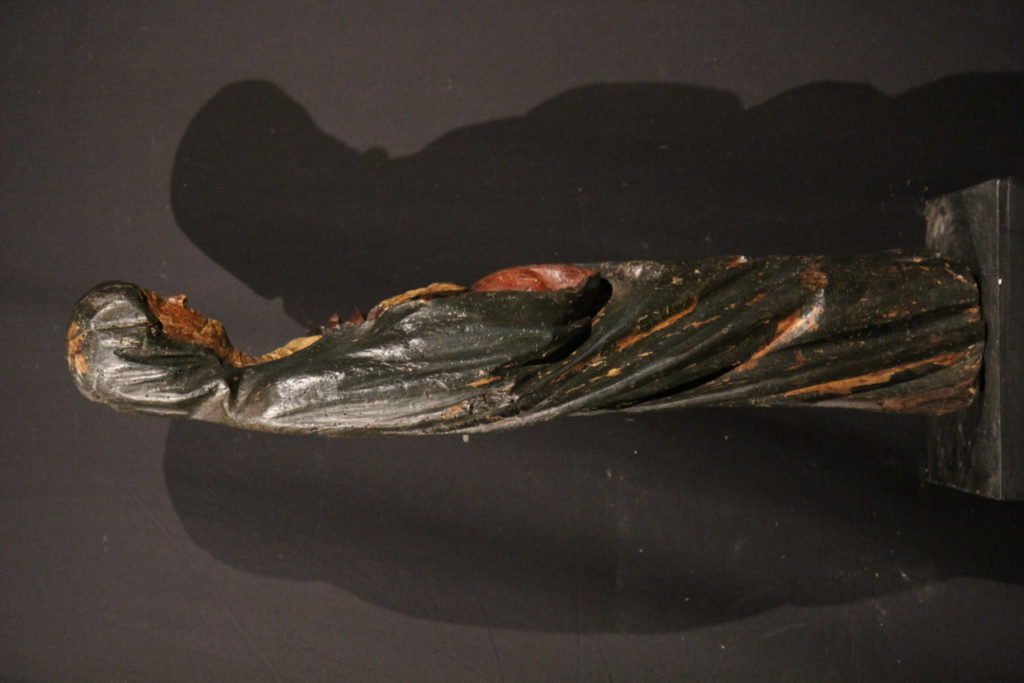
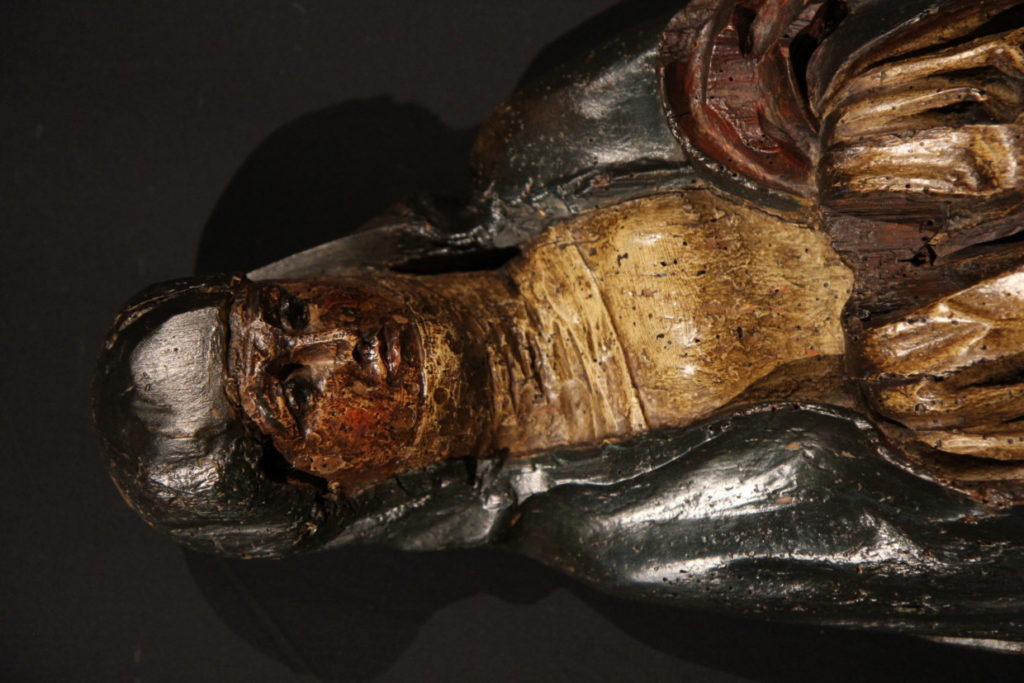
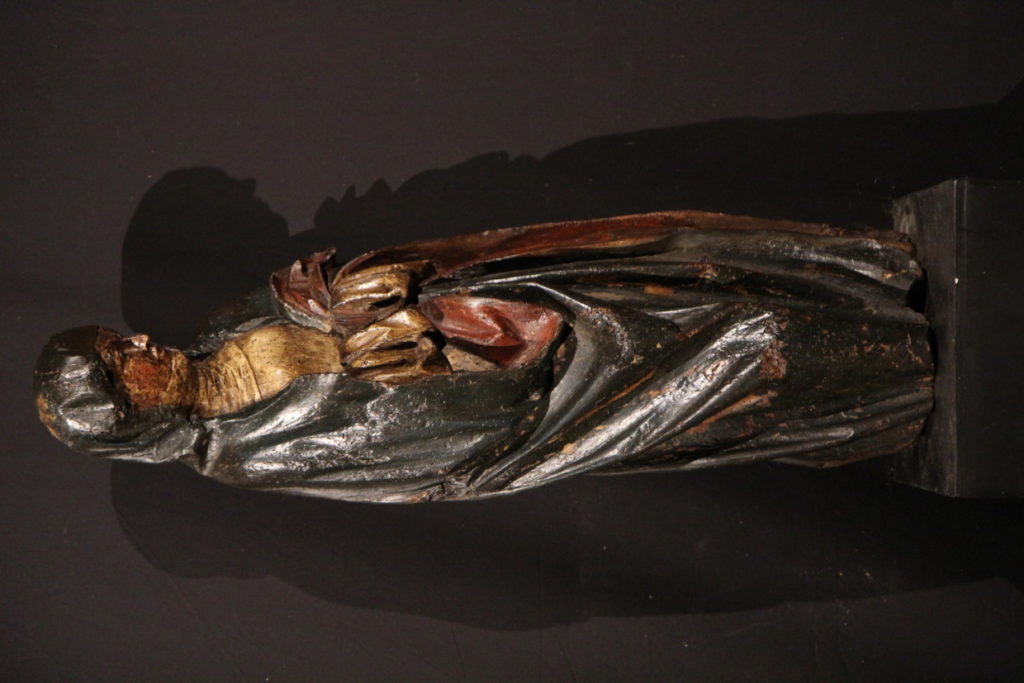
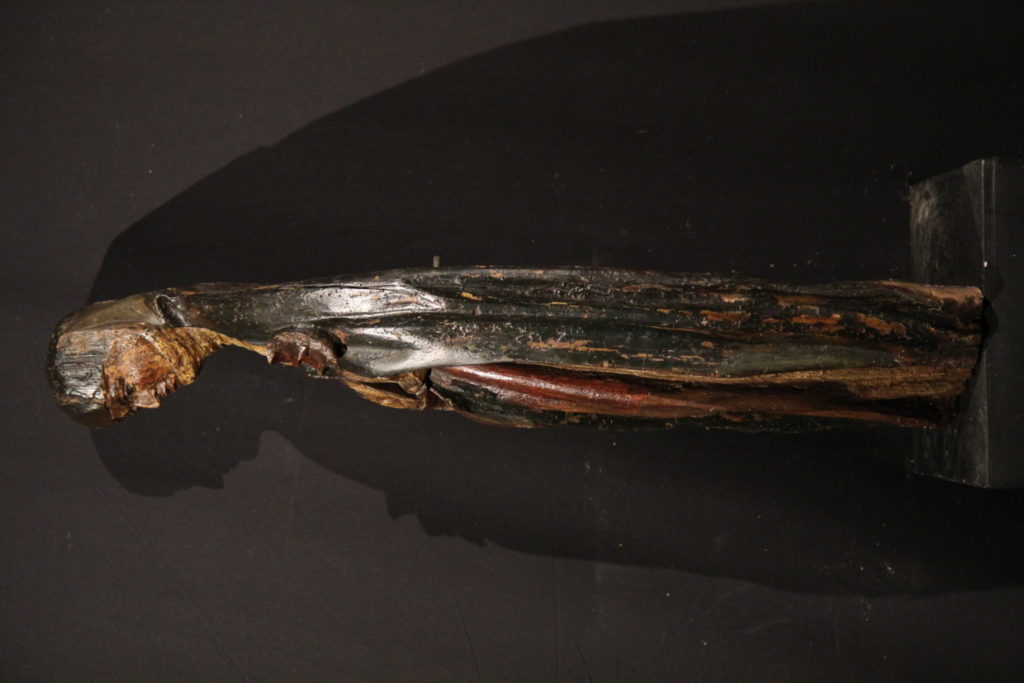
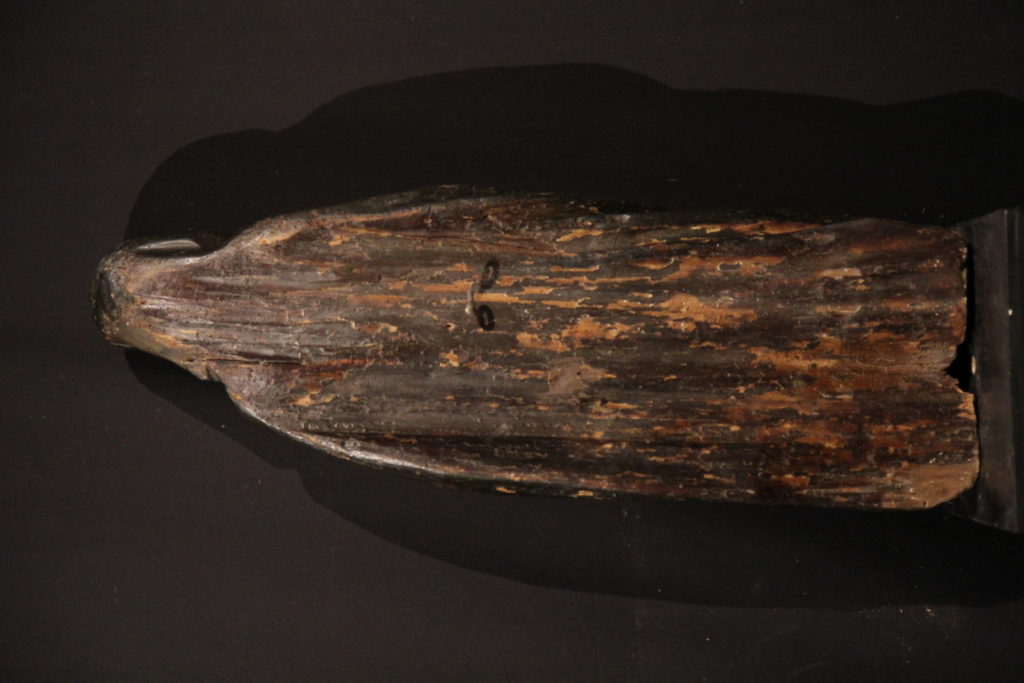
Virgin of Sorrows. Carved and polychrome lime wood statue. Germany, 1st half of the 15th century.
Virgin of Sorrows. Carved and polychrome lime wood statue with hollowed-out back. Dressed in a cloak veil, she wears a wimple; her face, marked by sadness, is inclined towards the dead Christ. This statue was probably part of a sepulchre or a calvary.
Germany, 1st half of the 15th century.
Details
| Period | 1st half of 15th C |
| Heigth | 31,10″ |
| Width | 11,42″ |
| Depth | 5,12″ |
| Price | 4 400 euros |
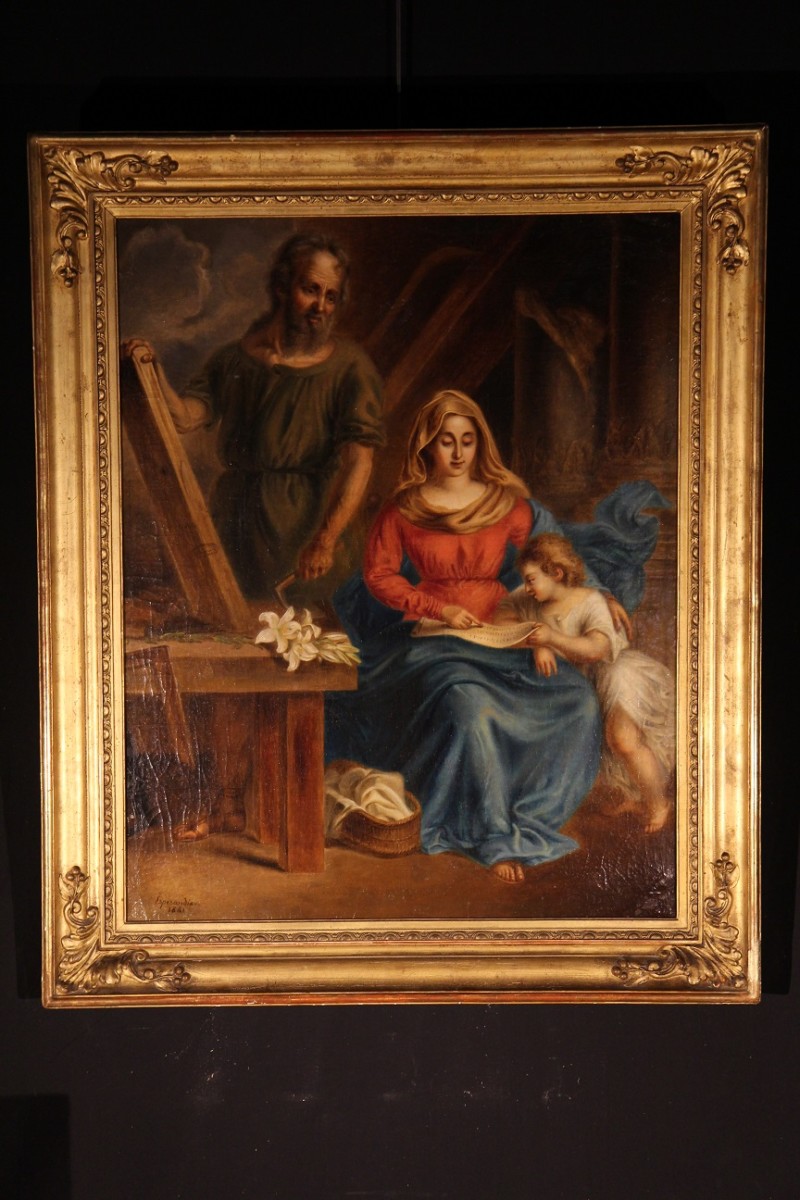
Oil on canvas. 19th C Provençal school. The Holy Family, signed Esperandieu.
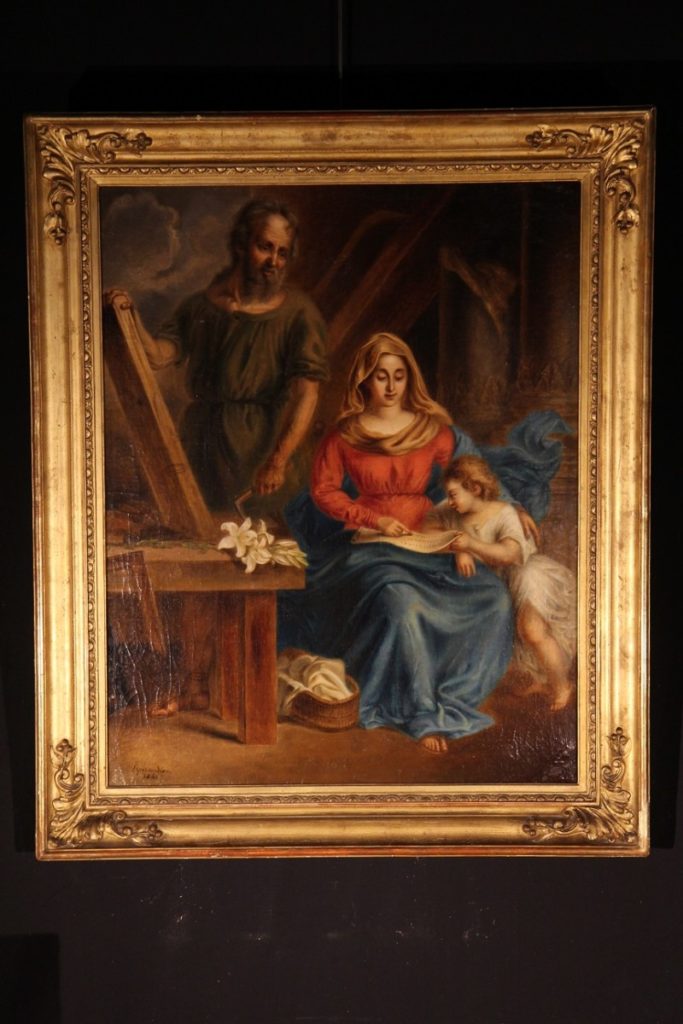
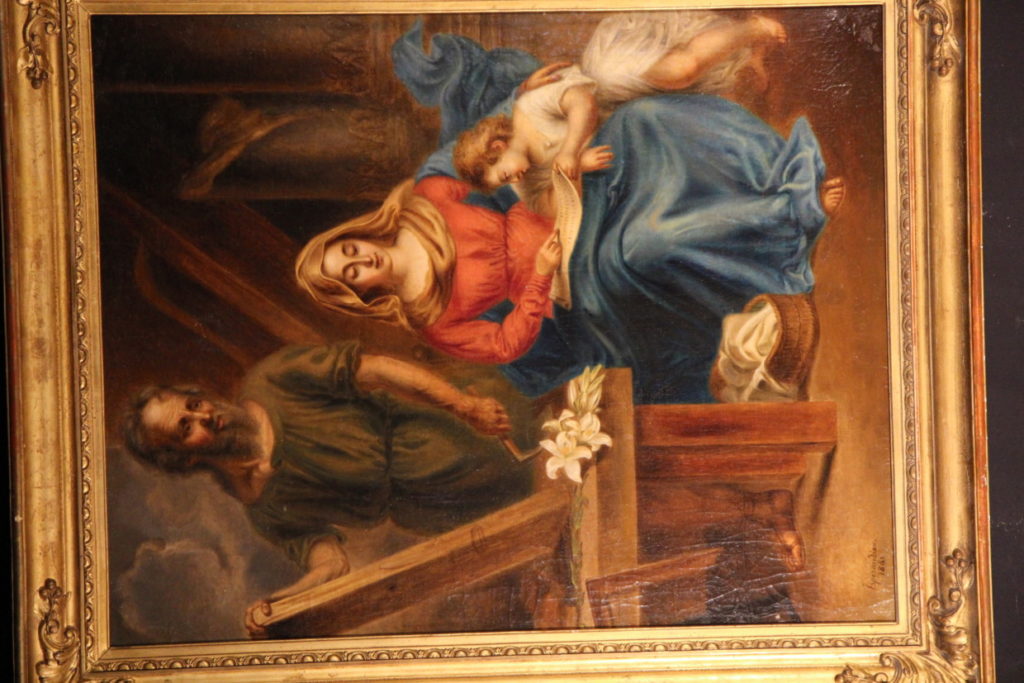
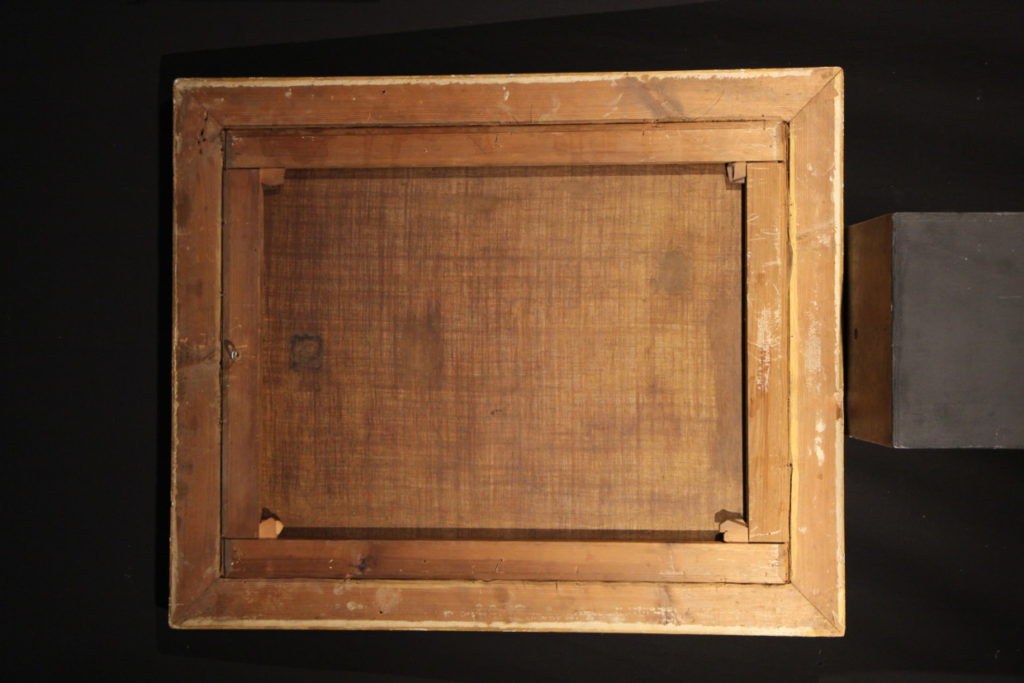
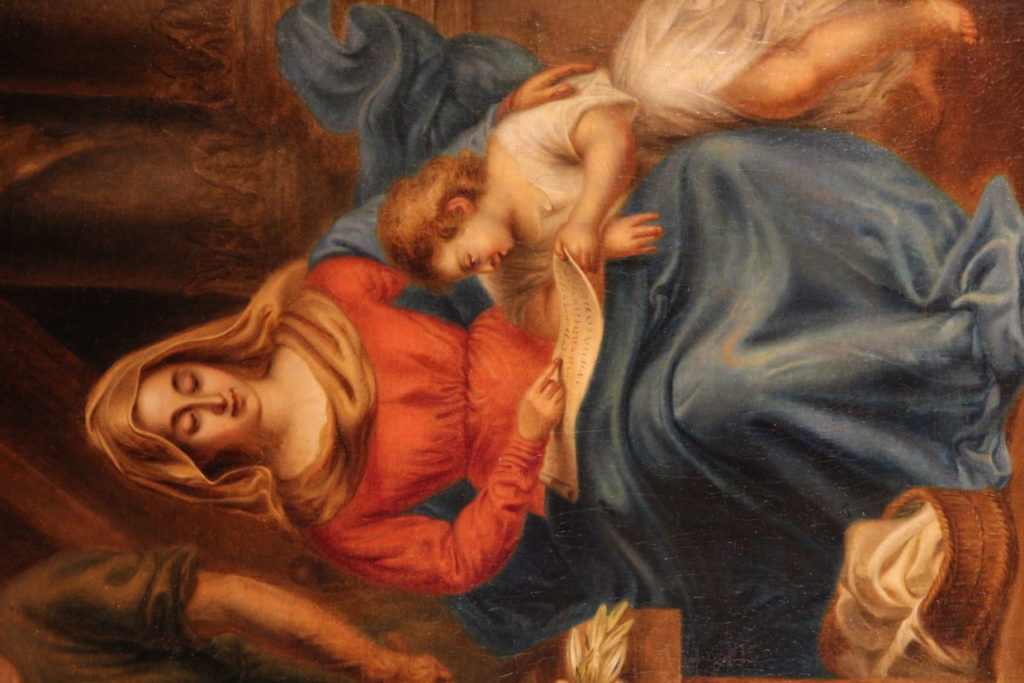
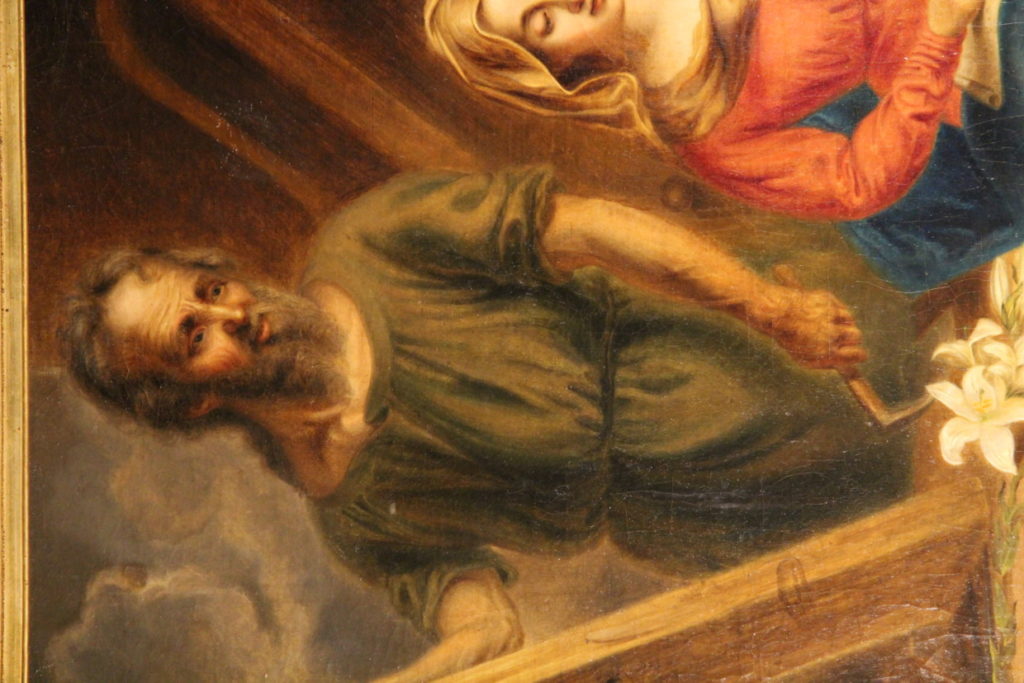
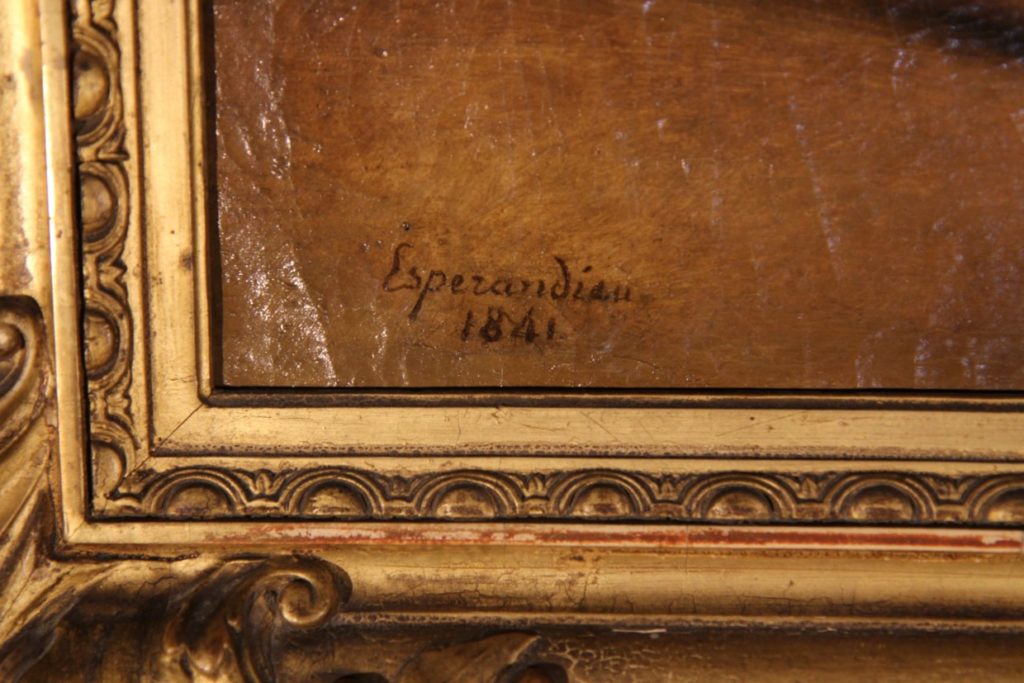
Oil on canvas. 19th-century Provençal school. The Holy Family, signed Esperandieu.
Oil on canvas. 19th-century Provençal school. The Holy Family, signed Esperandieu and dated 1841. Joseph, carpenter, Mary educating the child Jesus, lilies symbols of purity.
In its period frame.
Details
| Period | 19th C |
| Dimensions including frame | 33,65″ x 28,74″ |
| Prix | 1 200 euros |
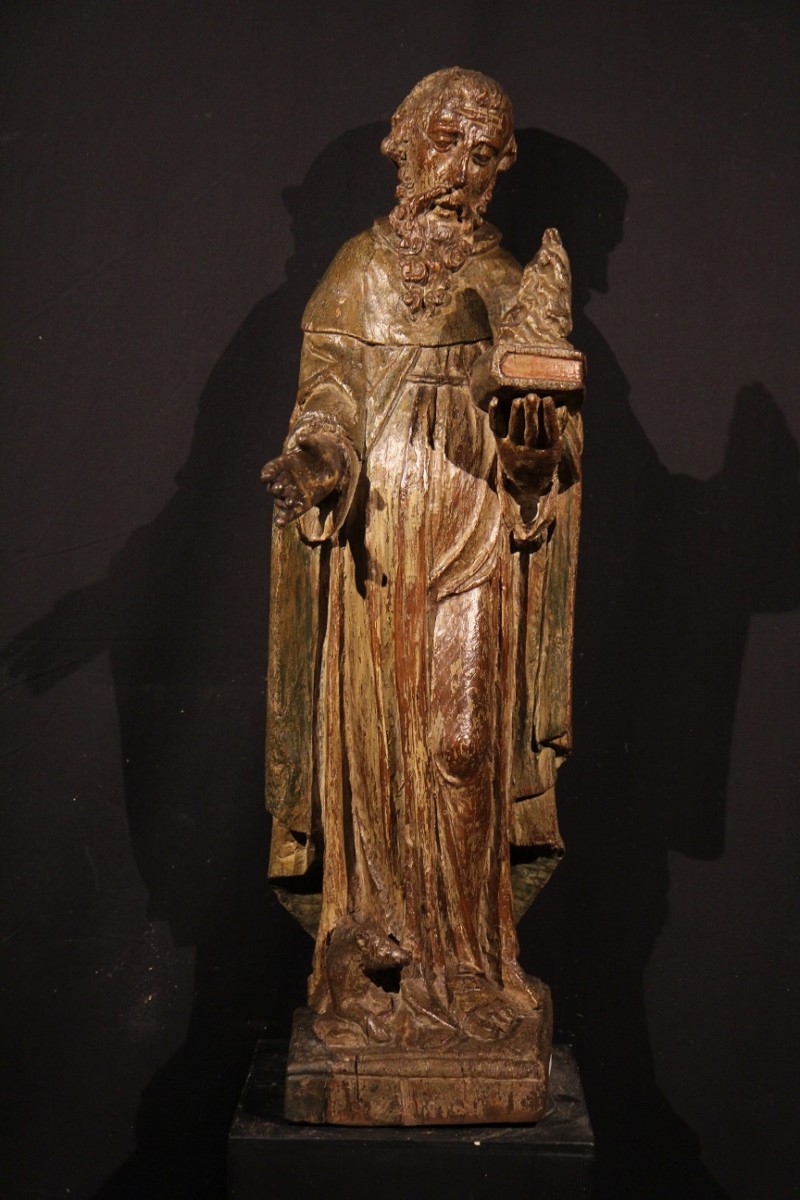
St. Anthony the Hermit. 16th C Carved oak statue with traces of polychromy.
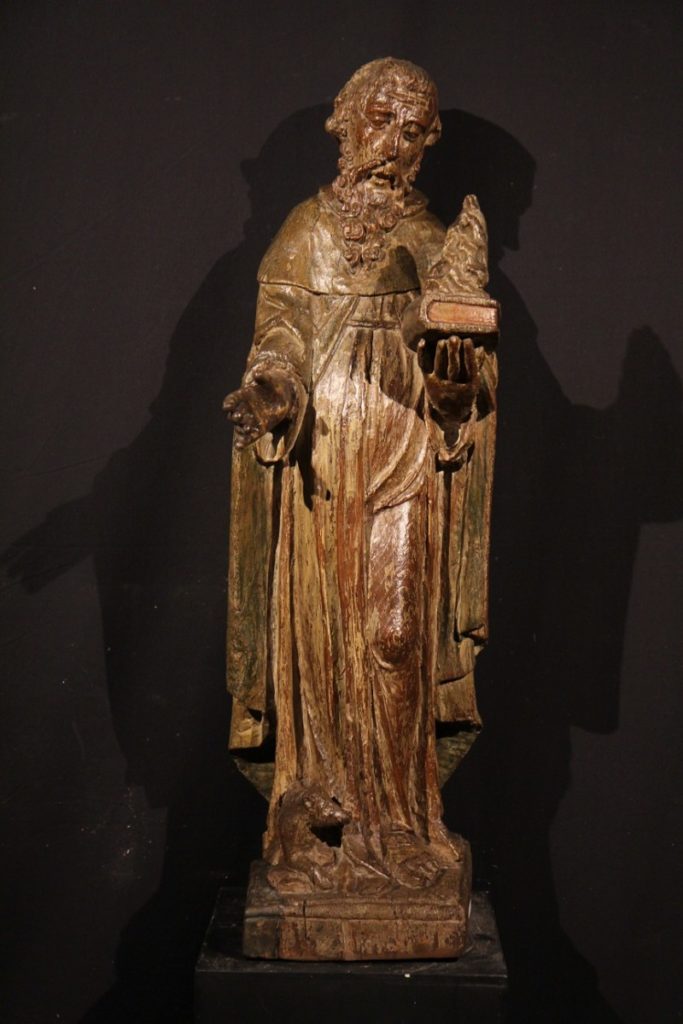
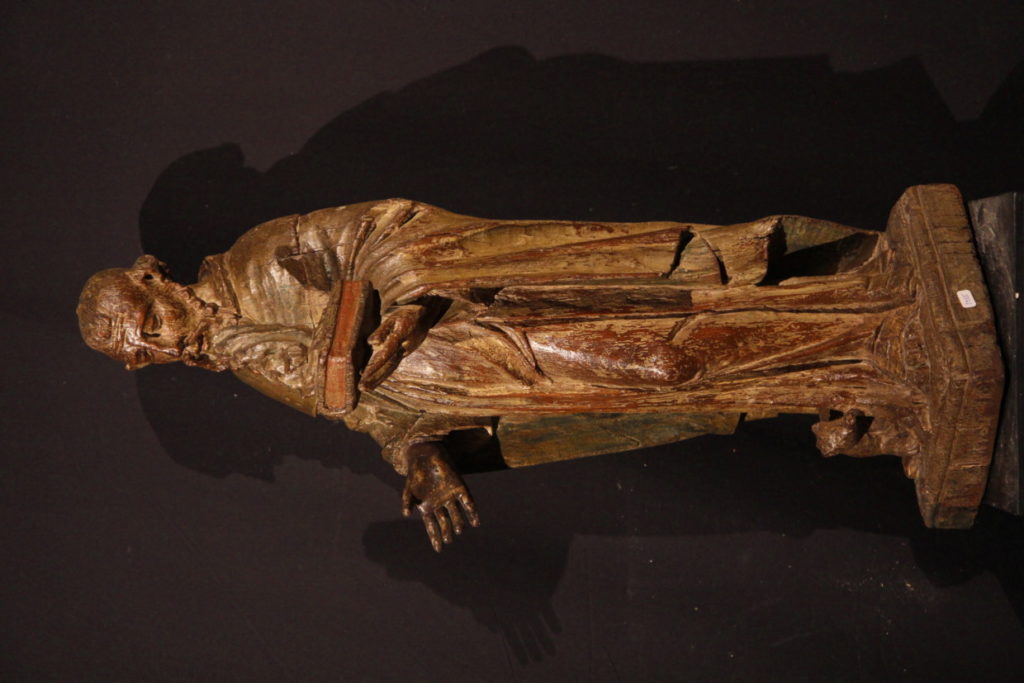
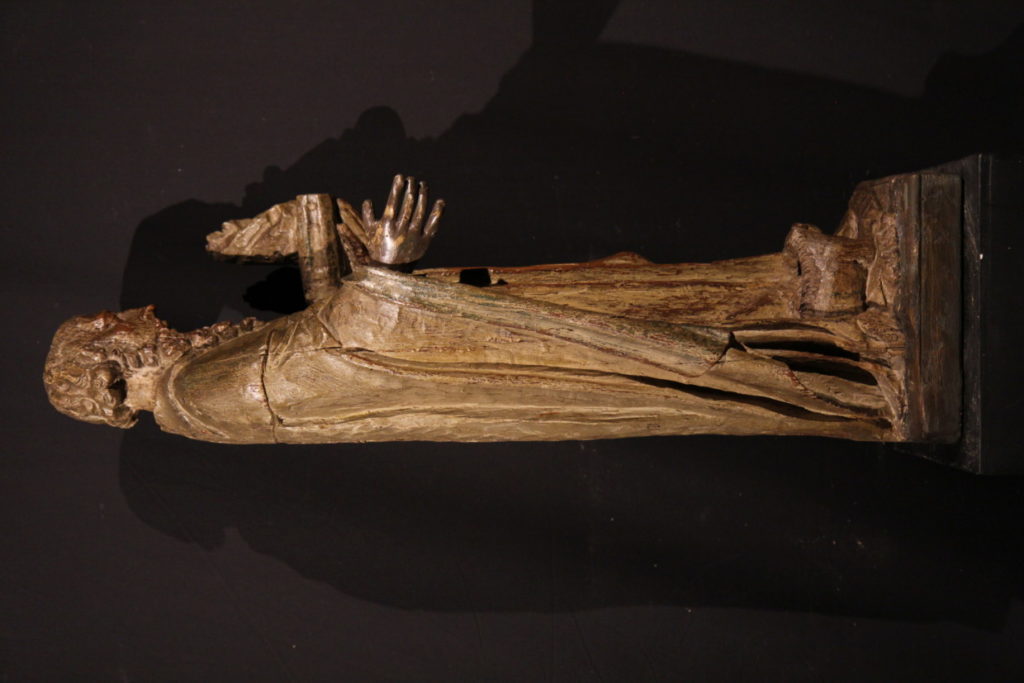
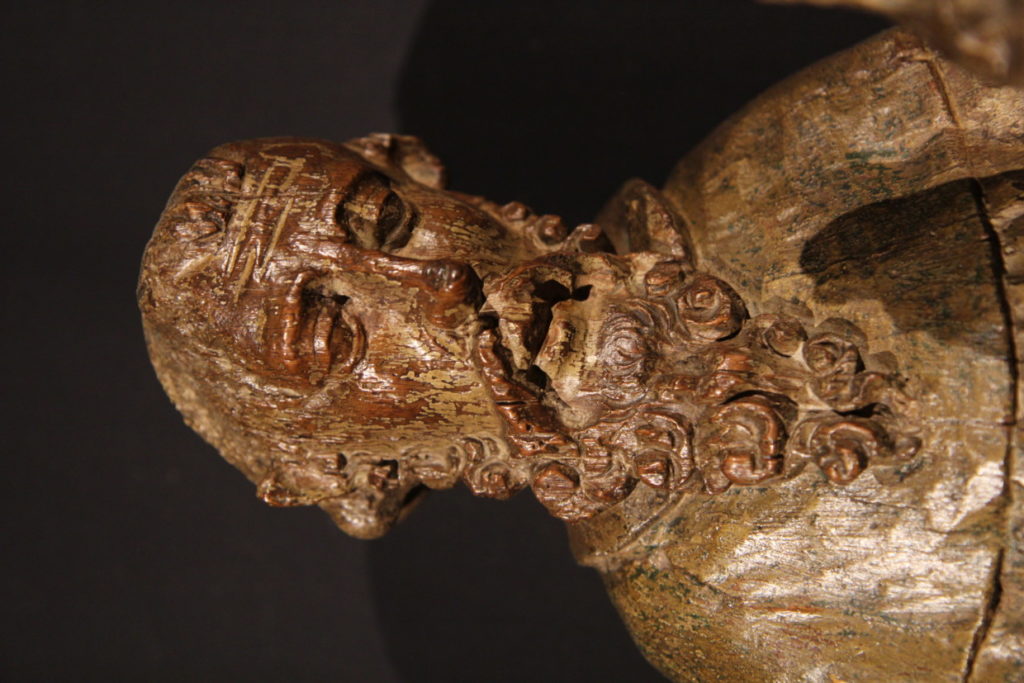
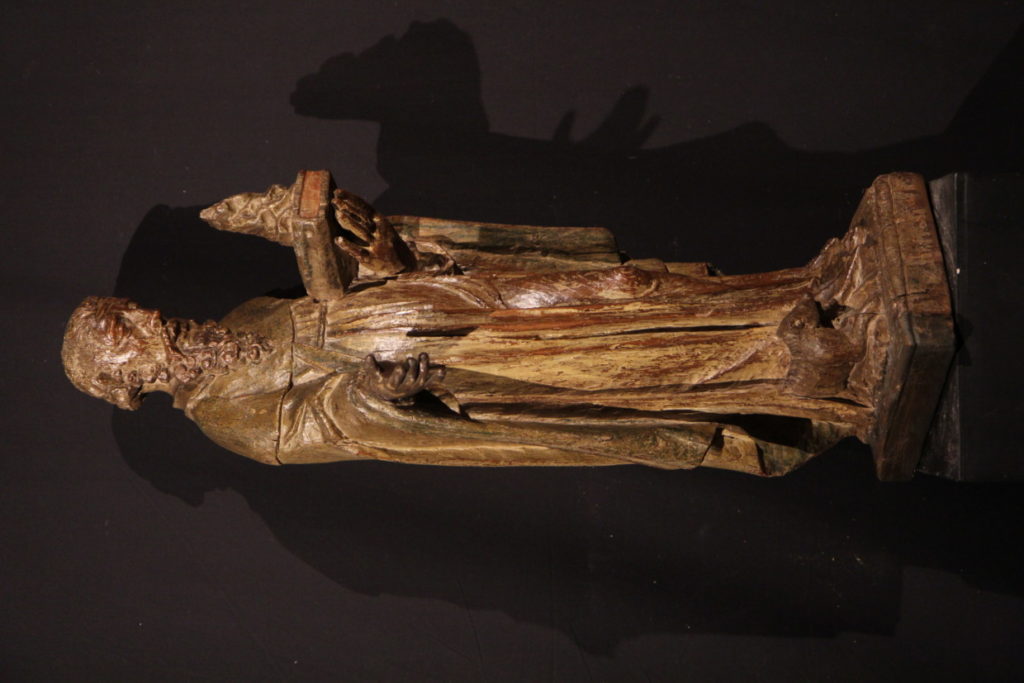
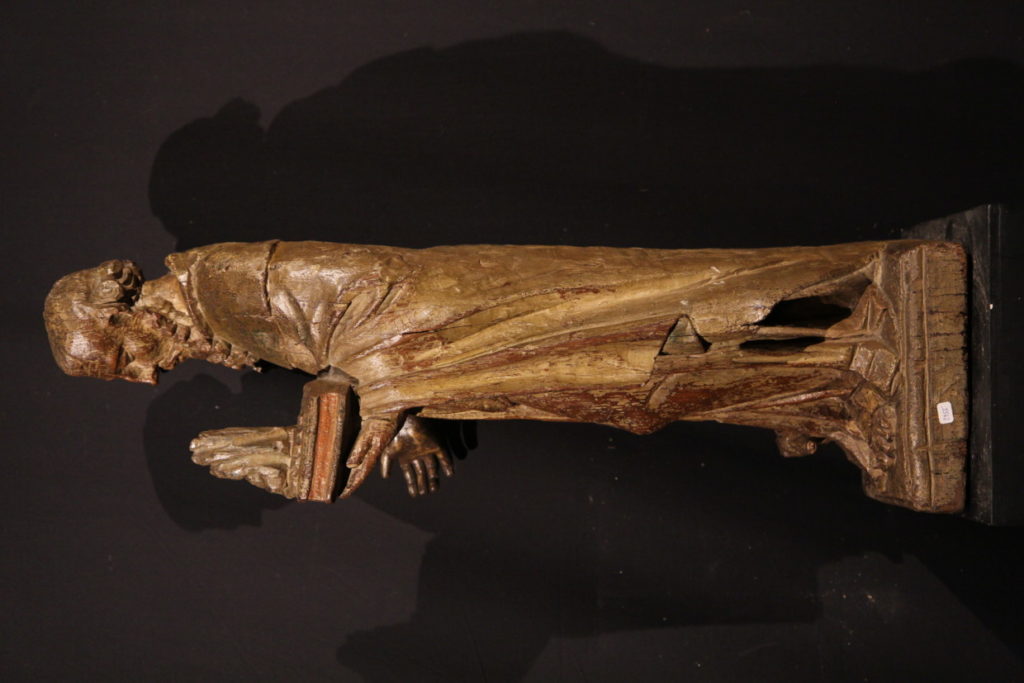
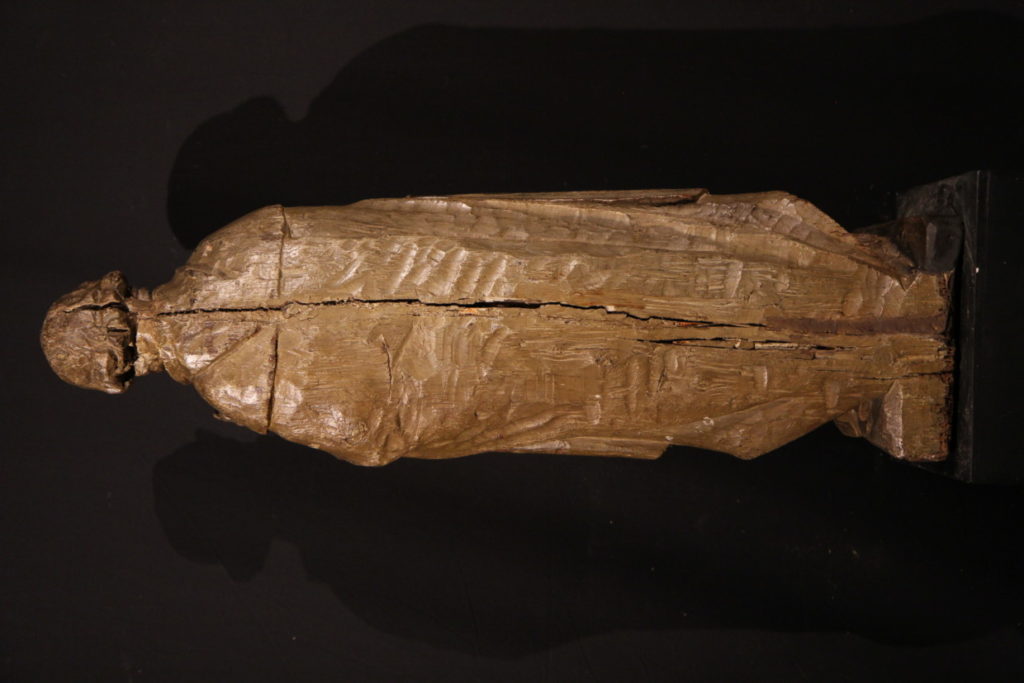
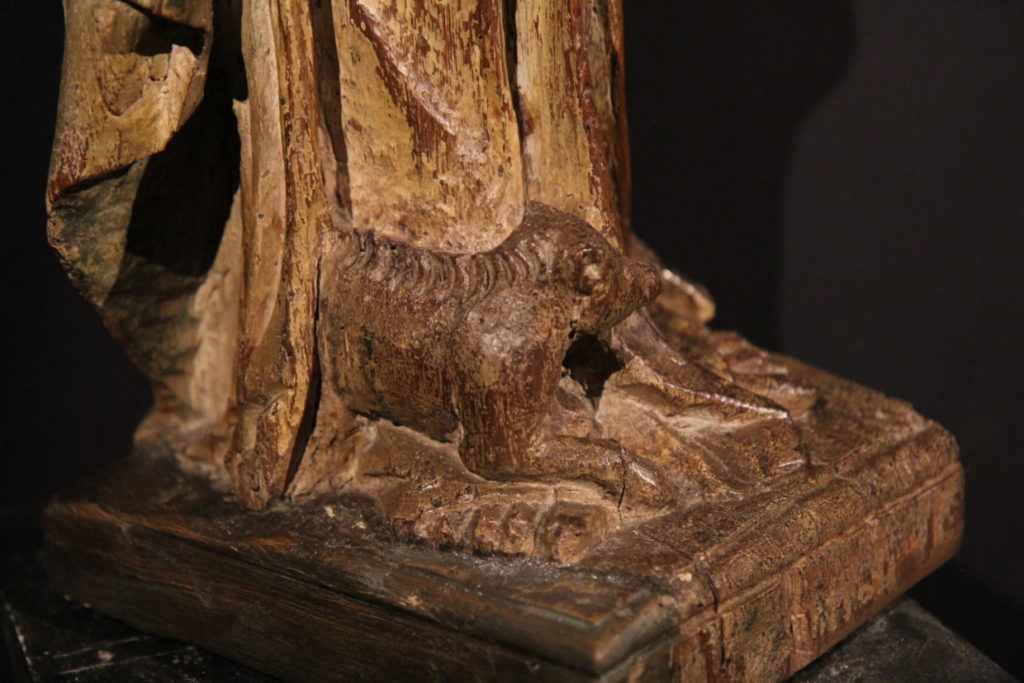
St. Anthony the Hermit. 16th C Carved oak statue with traces of polychromy.
St. Anthony the Hermit. Carved oak statue with traces of polychromy. Widely represented in the Middle Ages, he is considered the father of monks. His remarkable ability to resist pain and temptation led him to be attributed with healing powers. His relics, transferred to the Viennese region in 1070, helped cure the ergot poisoning, also known as St. Anthony’s fire. This led to the creation of the oldest institution of hospital order : the Antonines.
With an emaciated face and long beard, barefoot, he wears the tunic of the Antonines. In his left hand, he holds the book of the Rule, on which a fire springs forth. At his feet is a pig, symbolizing those raised by the monks.
16th century.
Details
| Period | 16th C |
| Heigth | 32,28″ |
| Width | 9,45″ |
| Depth | 9,055″ |
| Price | 3 600 euros |
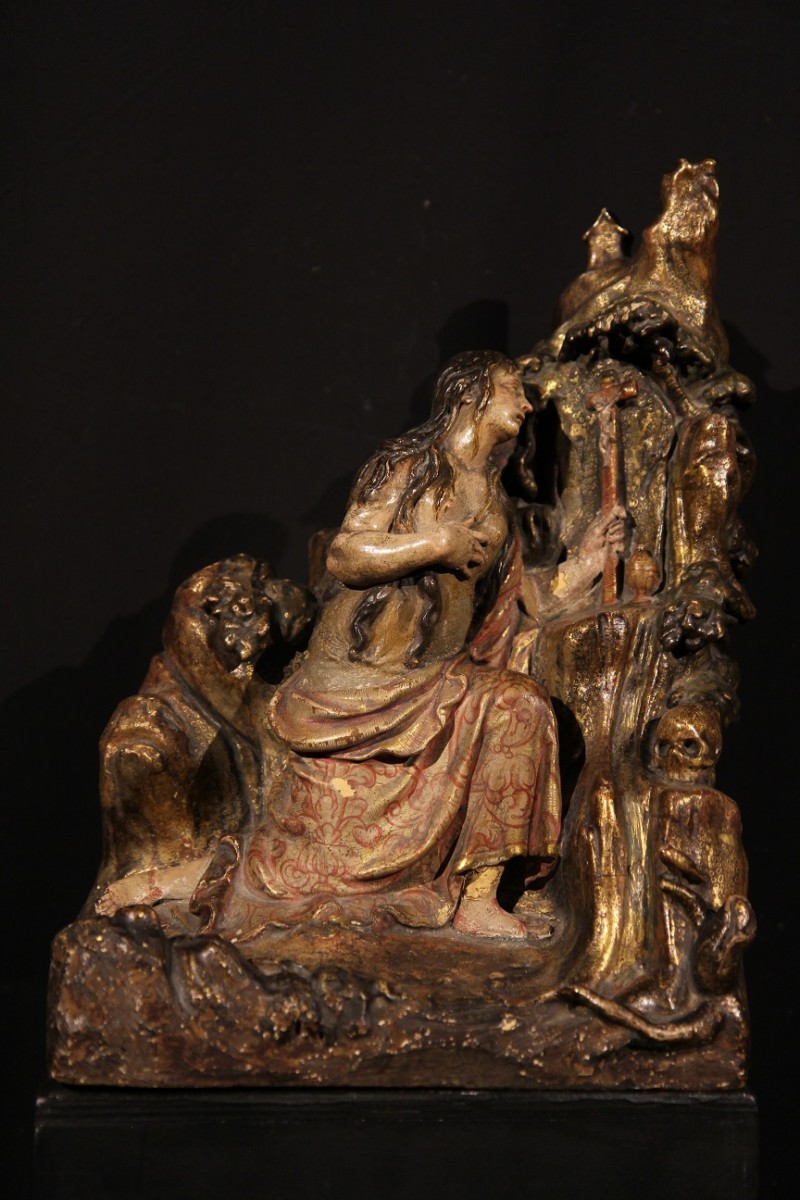
St. Mary Magdalene penitent. Sculpture in terracotta. Early 18th c.
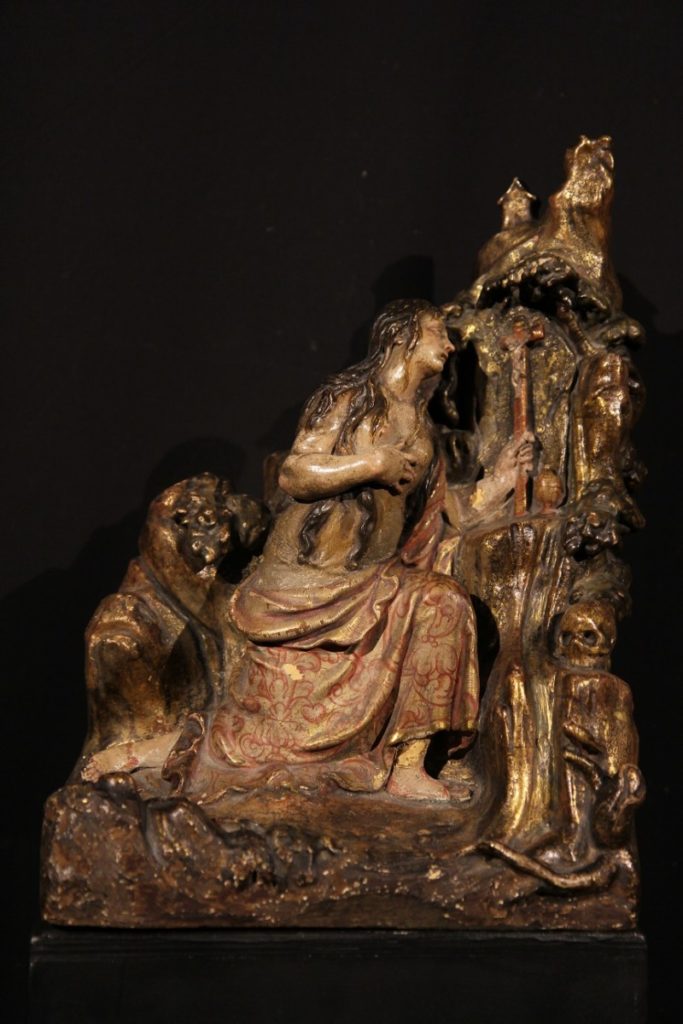
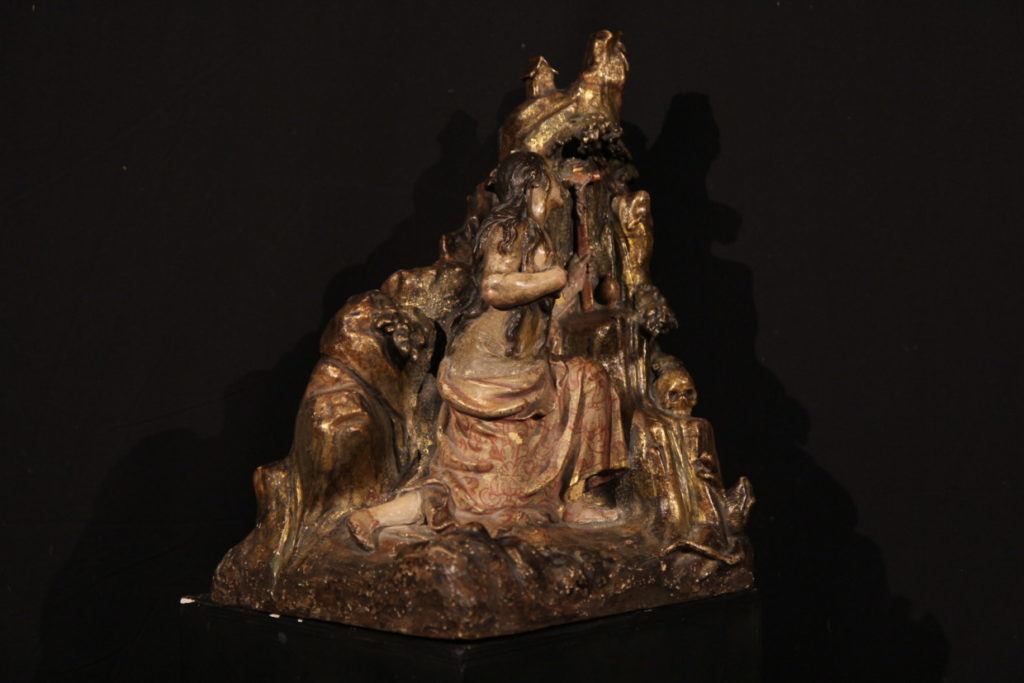
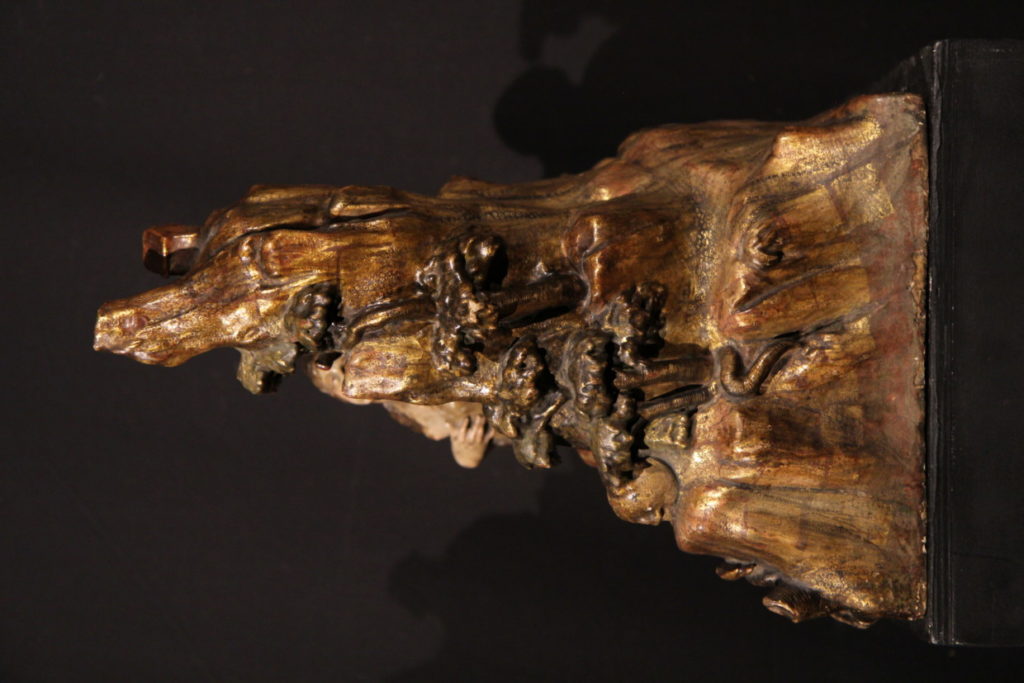
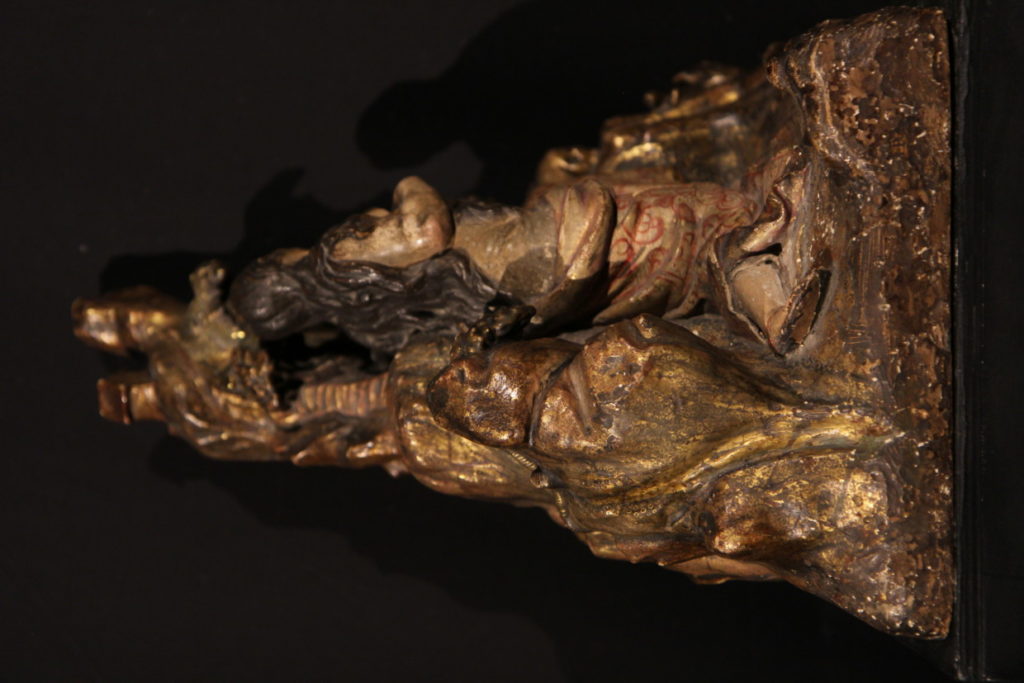
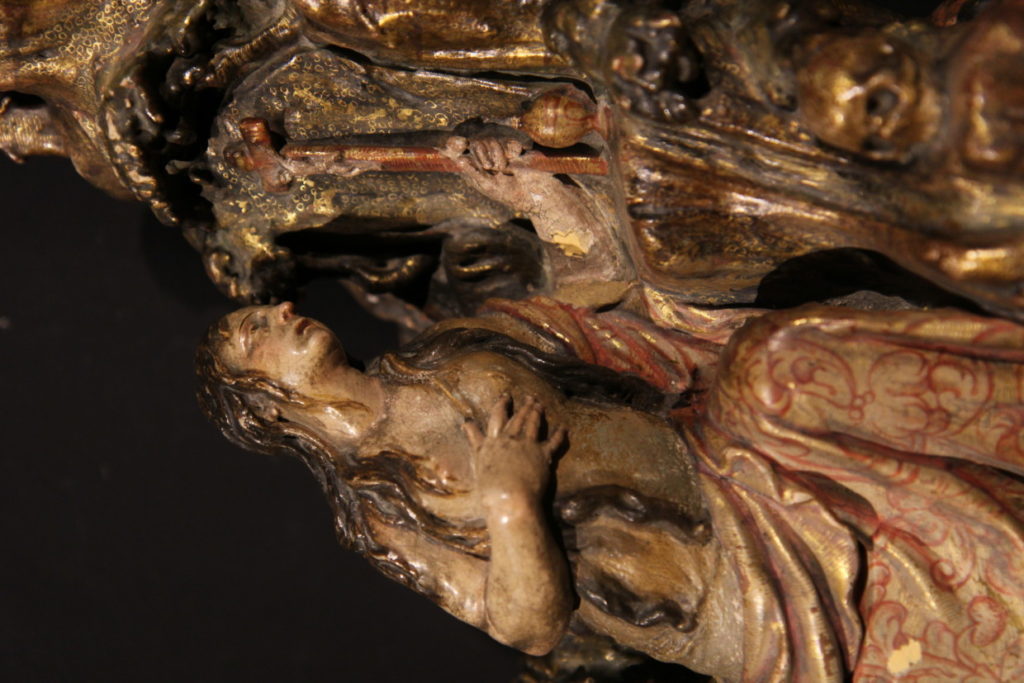
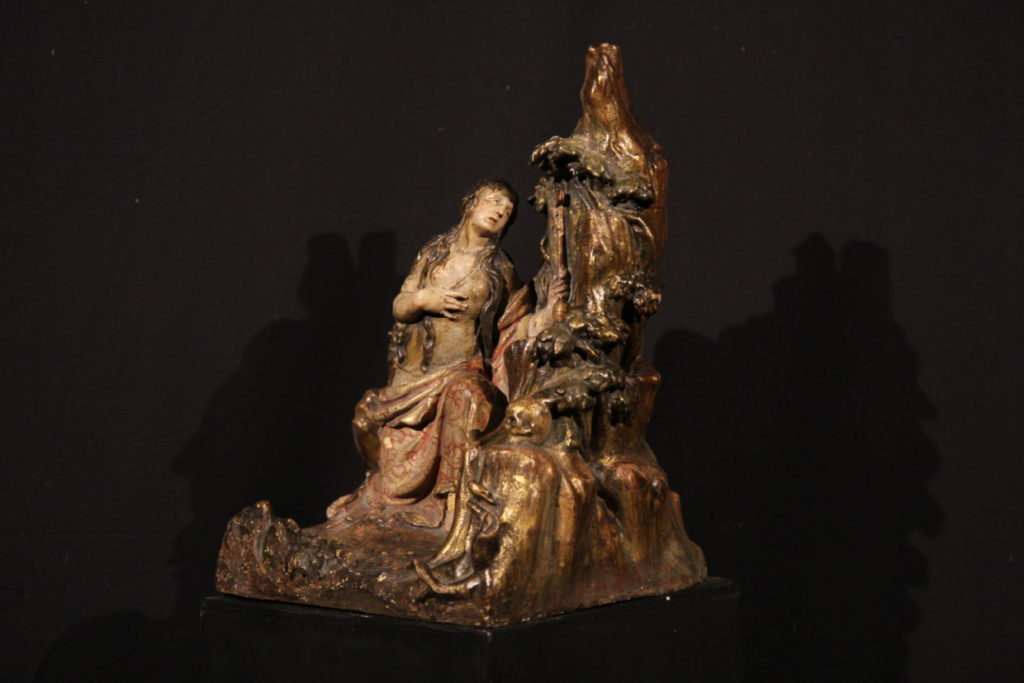
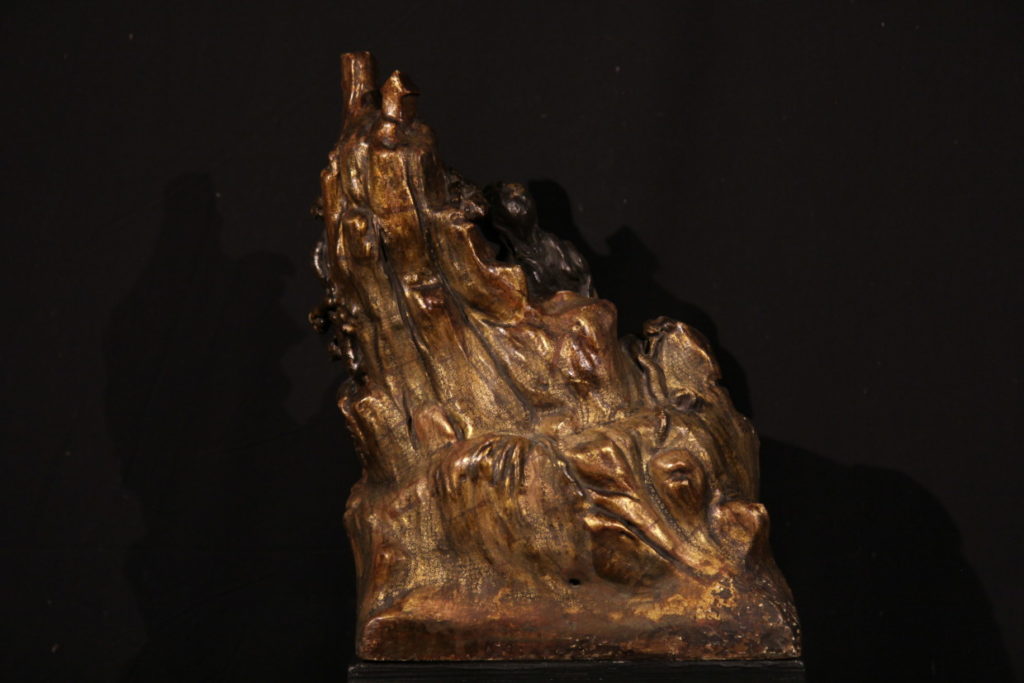
St. Mary Magdalene penitent. Sculpture in polychrome and gilded terracotta. Provençal work? Early 18th century.
St. Mary Magdalene penitent. Sculpture in polychrome and gilded terracotta. The saint, in prayer, is kneeling before a crucifix that she holds with her left hand. The surrounding decor evokes the cave (baume) where she lived the end of her days. Note the ointment vase (her attribute) and a skull, a symbol of vanity. A small chapel is depicted on the rock that recalls the one built at the top of the Ste Baume mountain in St Maximin, Provence.
Provençal work? Early 18th century.
Details
| Period | early 18th C |
| Heigth | 14,57 “ |
| Width | 10,63 “ |
| Depth | 9,45 “ |
| Price | 2 900 euros |
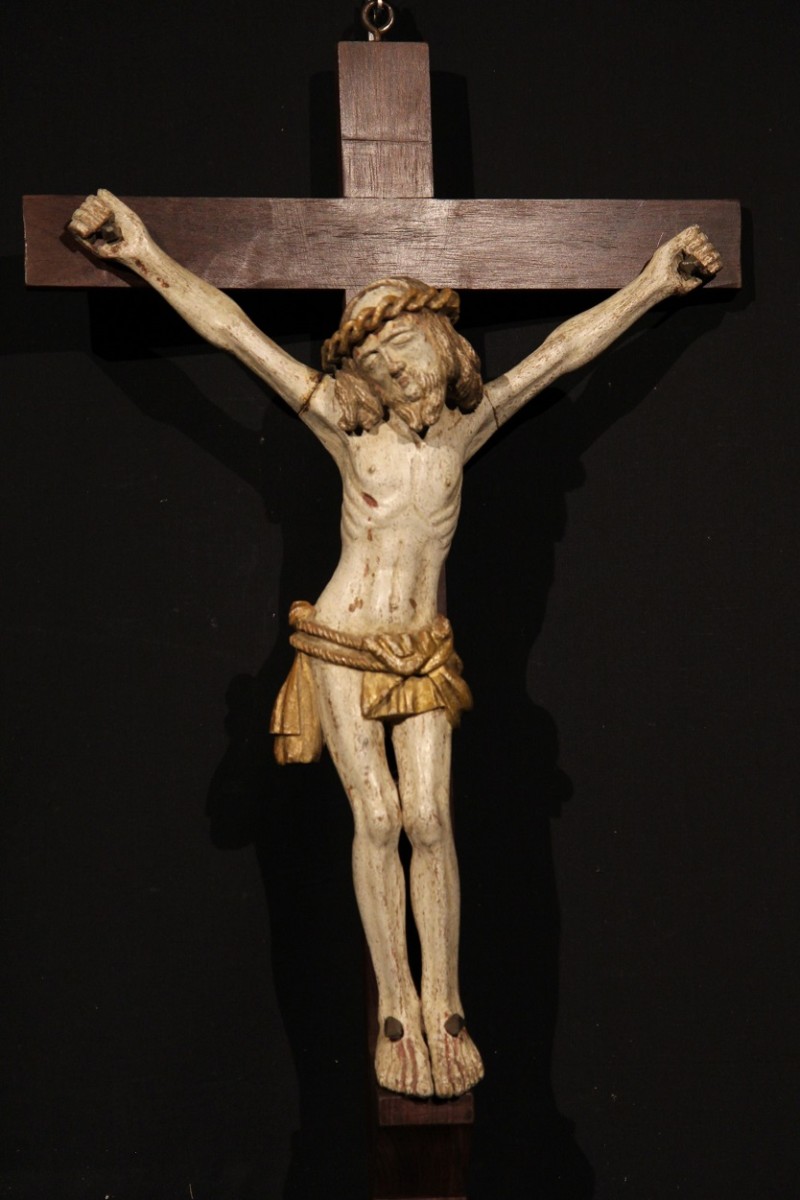
Carved, gilded, and polychrome wooden crucifix. 16th century.
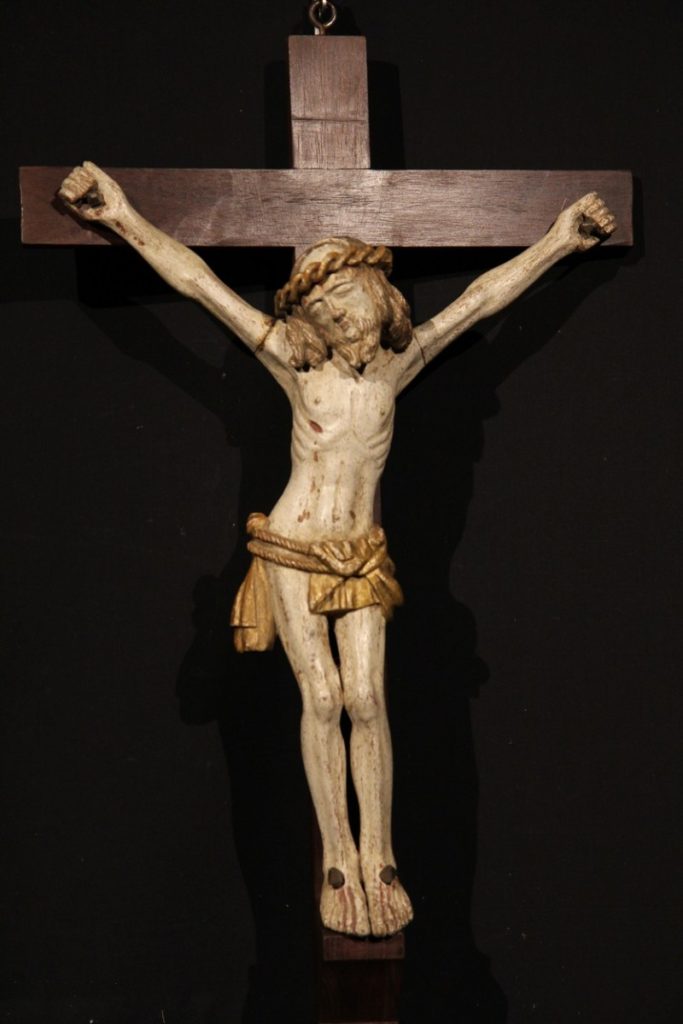
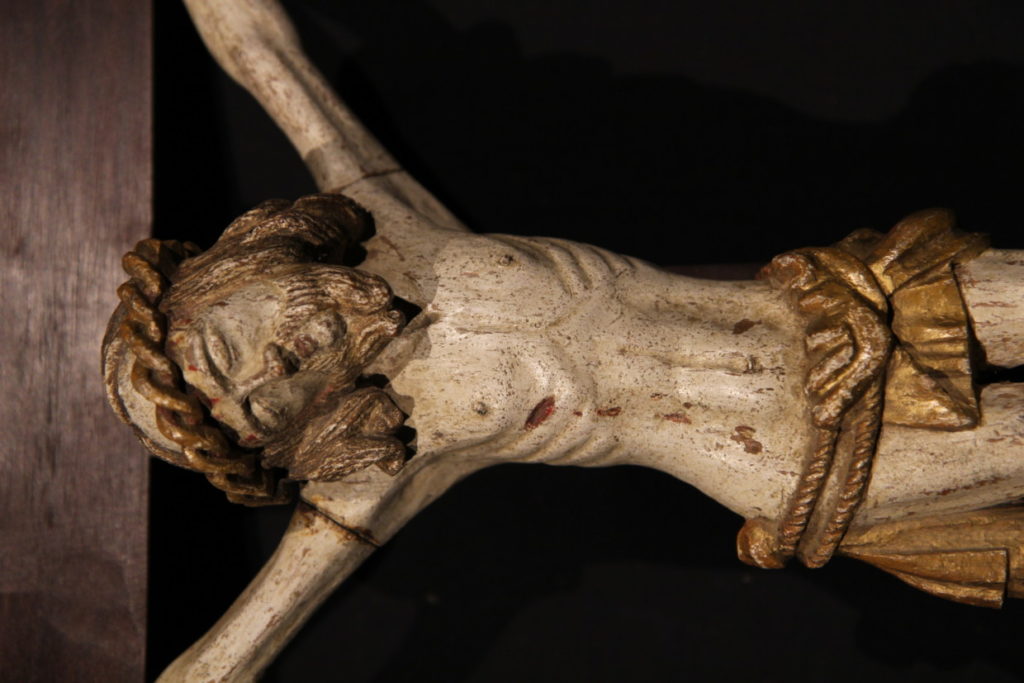
Carved, gilded, and polychrome wooden crucifix. 16th century.
Carved, gilded, and polychrome wooden crucifix.
Christ covered with the crown of thorns. His finely-featured face expresses pain and serenity. 16th century.
The cross is modern.
Details
| Period | 16th C |
| Christ Heigth x Width | 17,32″ x 12,60″ |
| Cross Heigth x Width | 25,98″ x 13,78″ |
| Price | 1 300 euros |
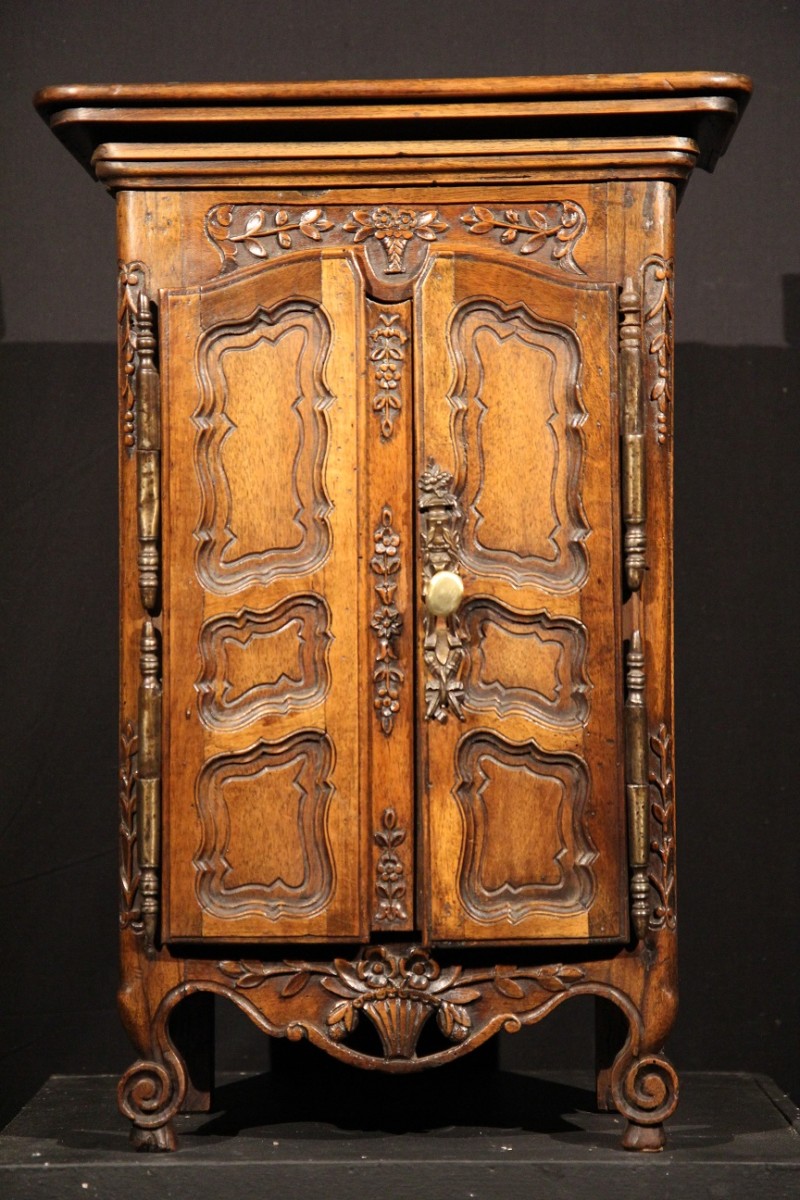
Small master piece of furniture. Walnut wood. Early 19th c.
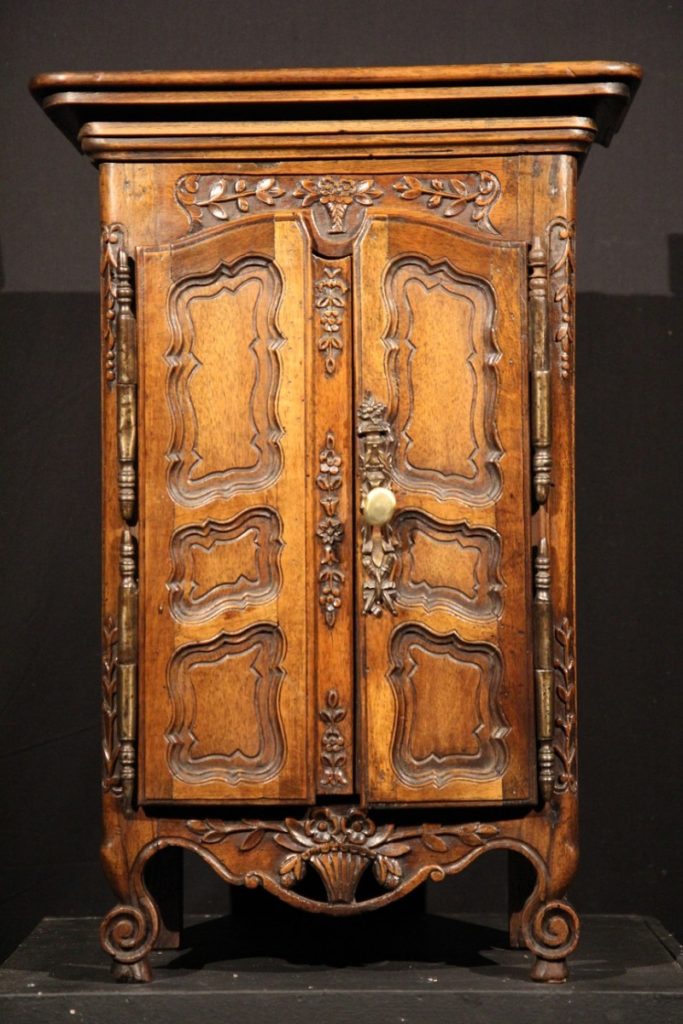
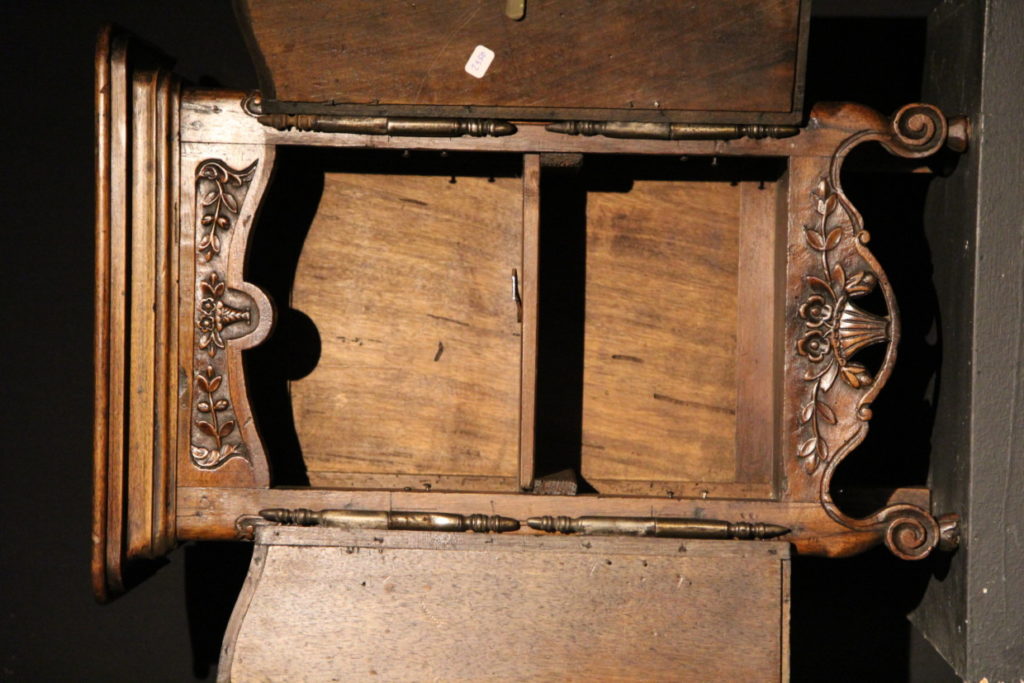
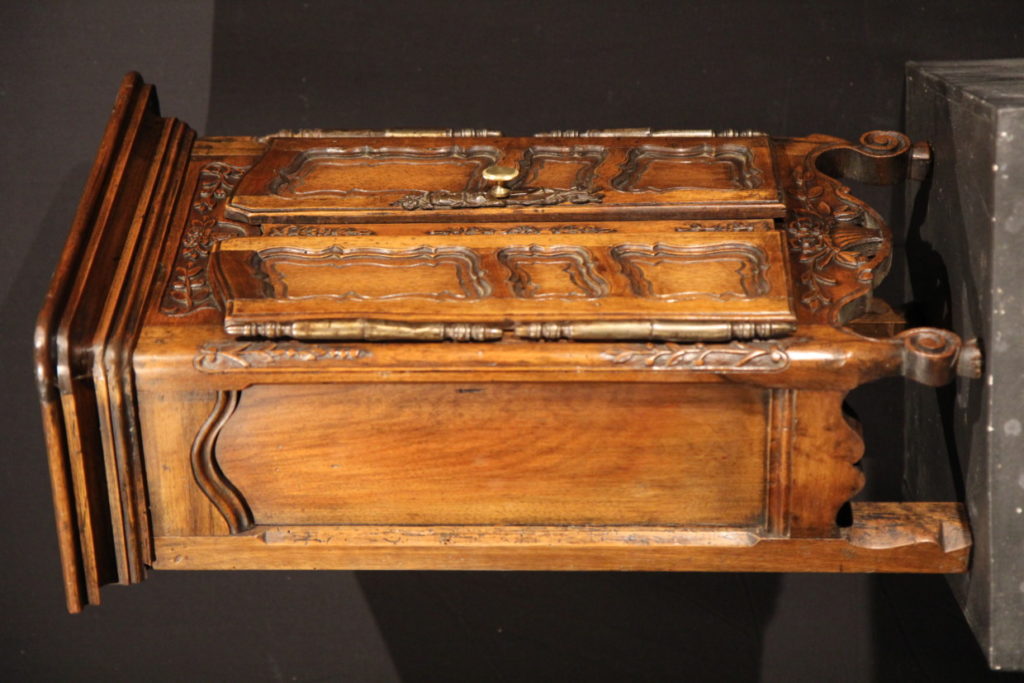
Small master piece of furniture representing a Provençal wedding armoire (wardrobe). Walnut wood. First half of the 19th century.
Small master piece of furniture representing a Provençal wedding armoire (wardrobe) with its two doors with scalloped panels and its openwork low crossbar decorated with the marriage basket.
Walnut wood. First half of the 19th century.
Details
| Period | early 19th C |
| Heigth | 20,87″ |
| Cornice | 13,78″ x 4,72″ |
| Price | 1 400 euros |
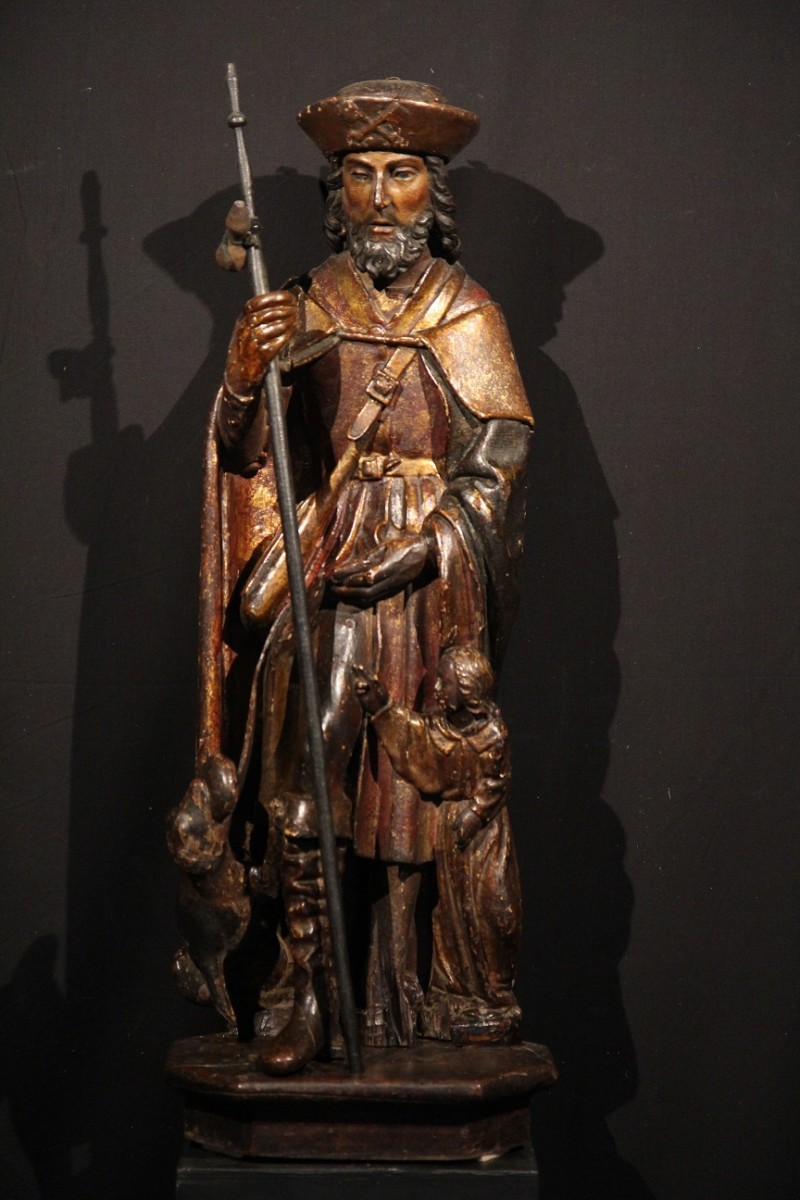
St Roch. Carved, lacquered, and gilded wooden statue circa 1600.
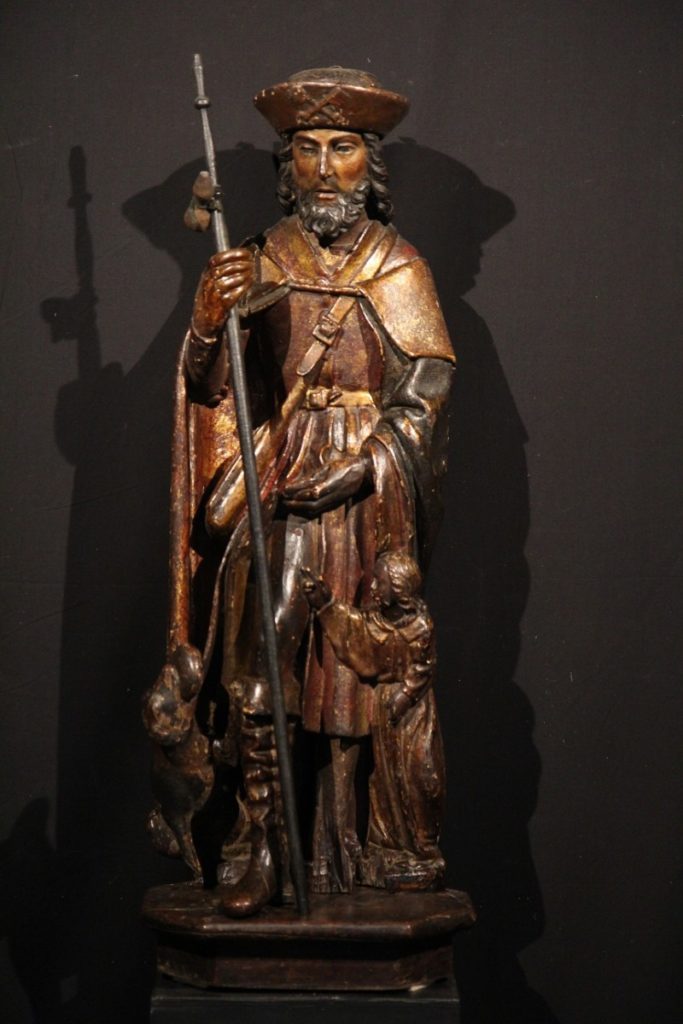
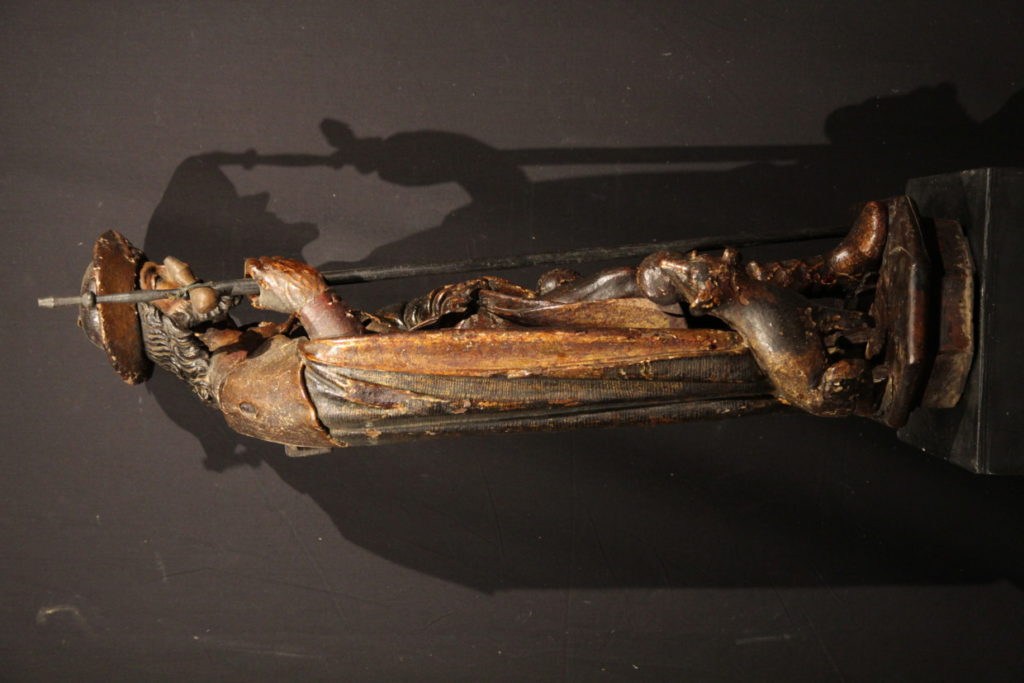
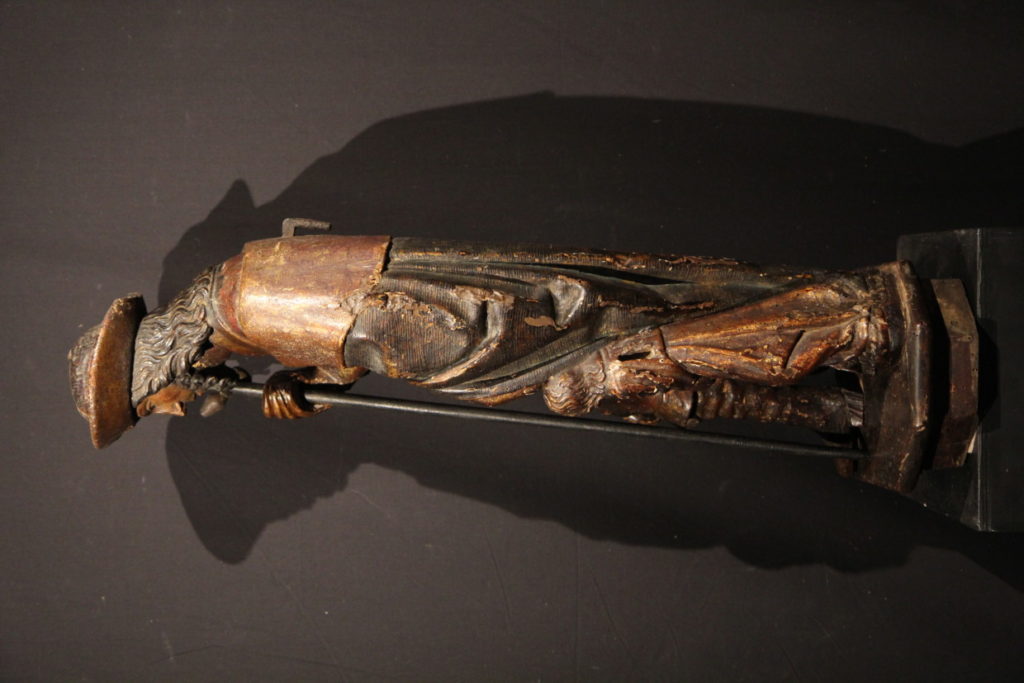
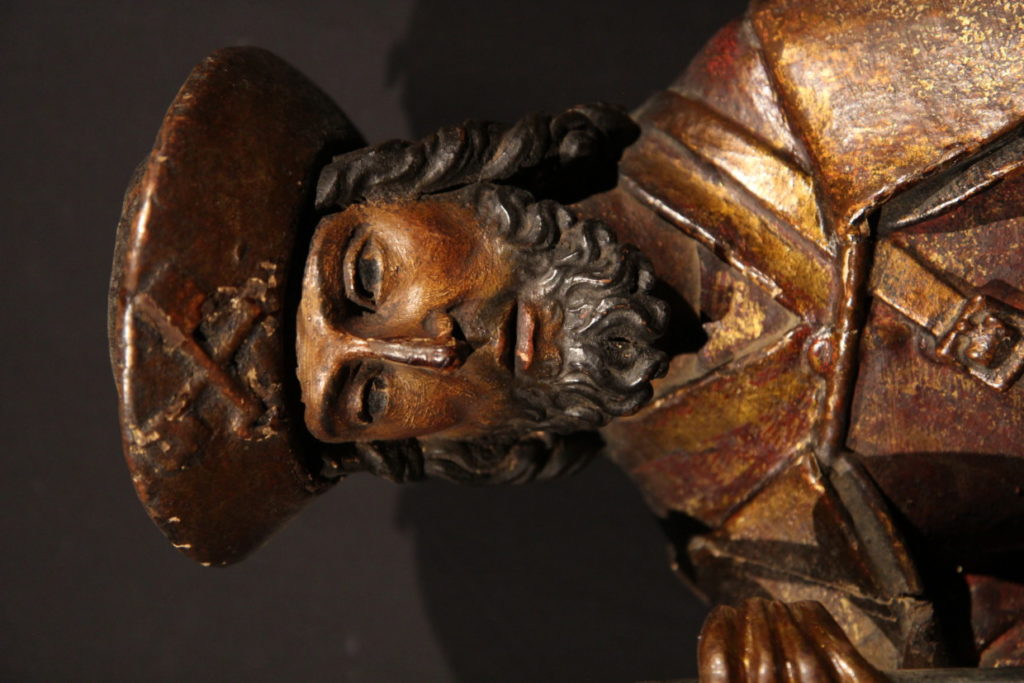
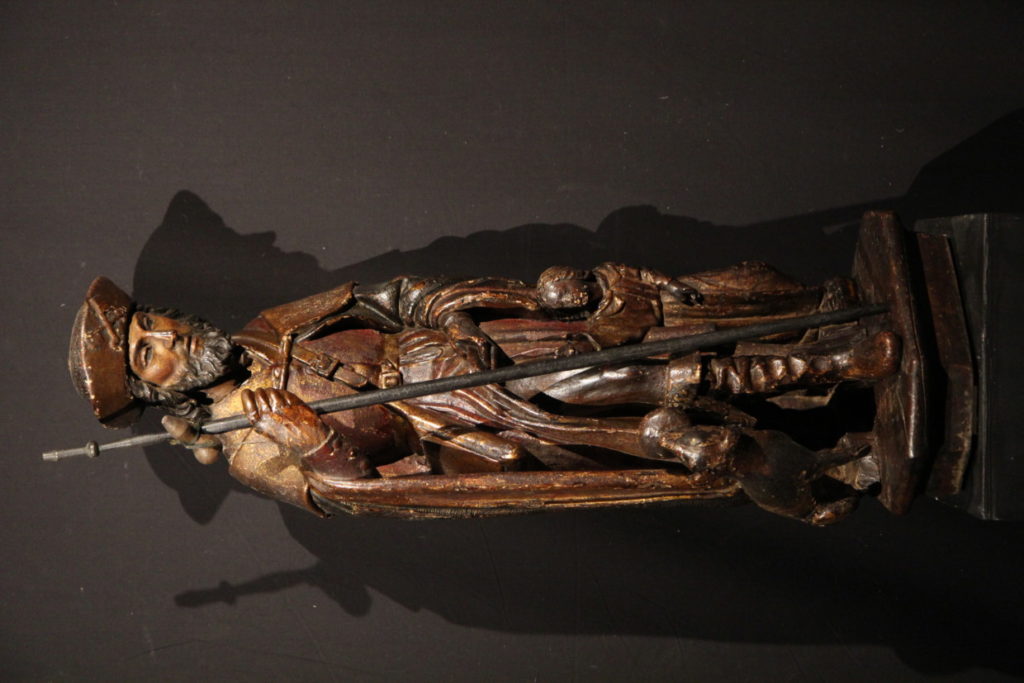
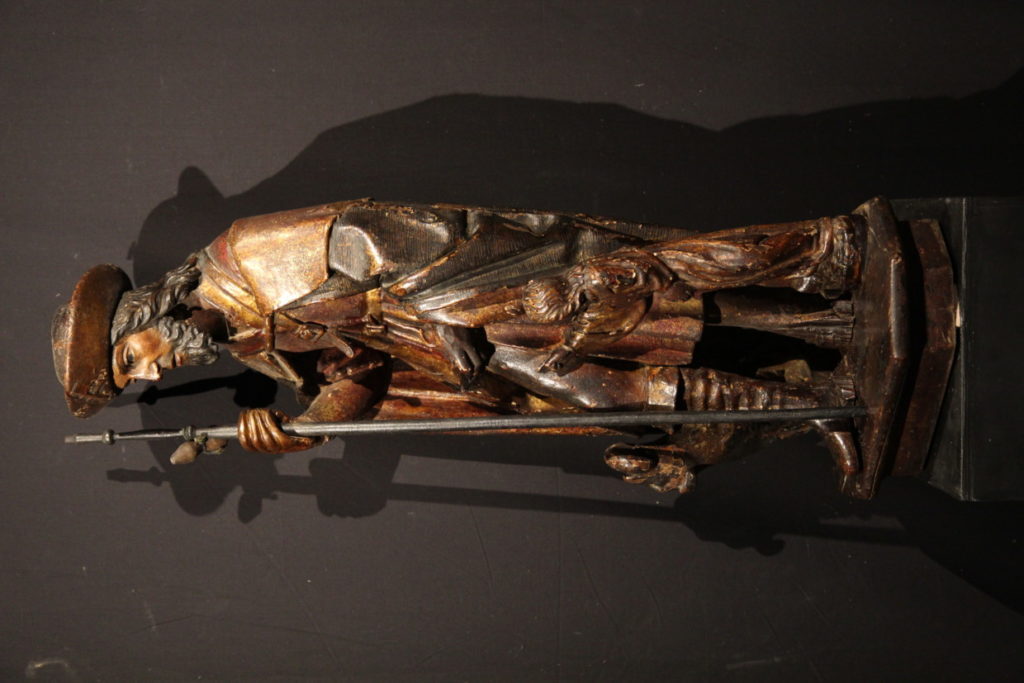
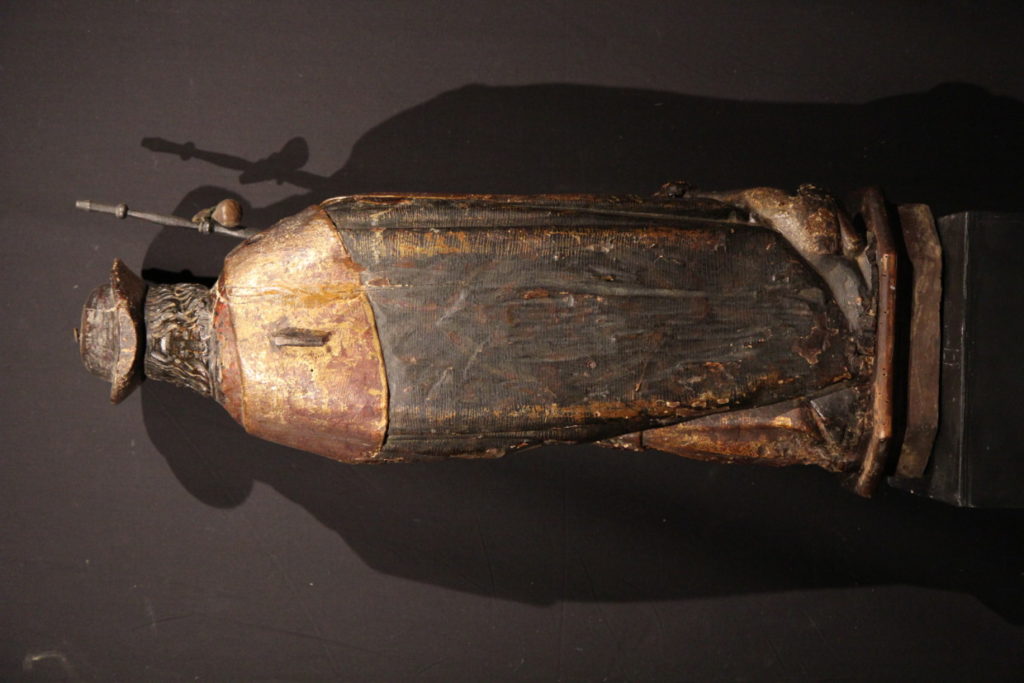
St Roch. Carved, lacquered, and gilded wooden statue circa 1600.
St. Roch. Carved, lacquered, and gilded wooden statue. Dressed as a pilgrim, he wears the two keys of romieu on his hat. He shows the bubo of the plague on his leg. He is accompanied by his dog (carrying a loaf of bread) and also by a nurse angel.
Originally from Montpellier, he is considered a saint who protects against the plague.
Original lacquer and gilding. Circa 1600.
Details
| Period | circa 1600 |
| Heigth | 31,89″ |
| Width | 12,20″ |
| Depth | 8,27″ |
| Price | 3 800 euros |


Recent Comments